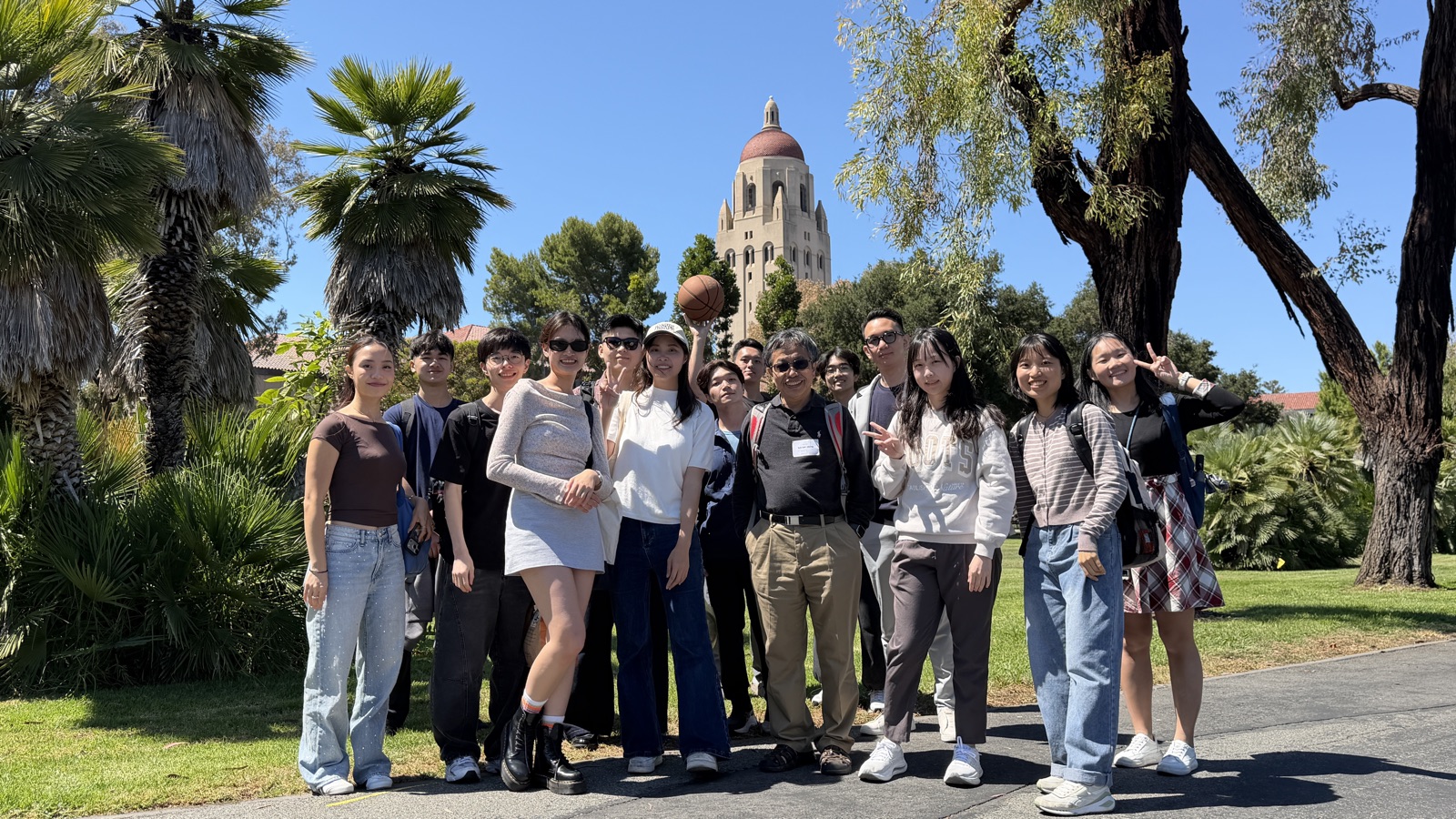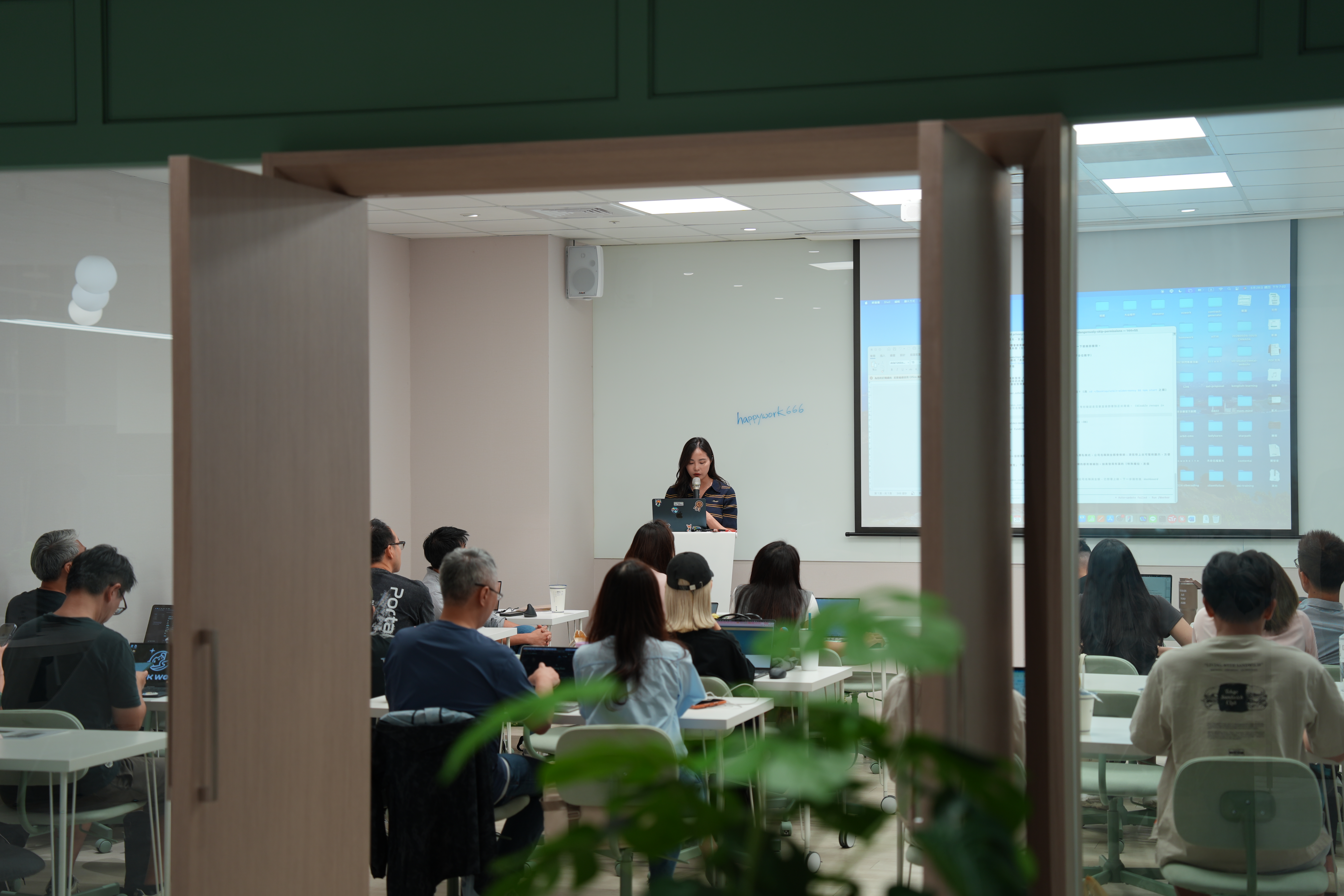
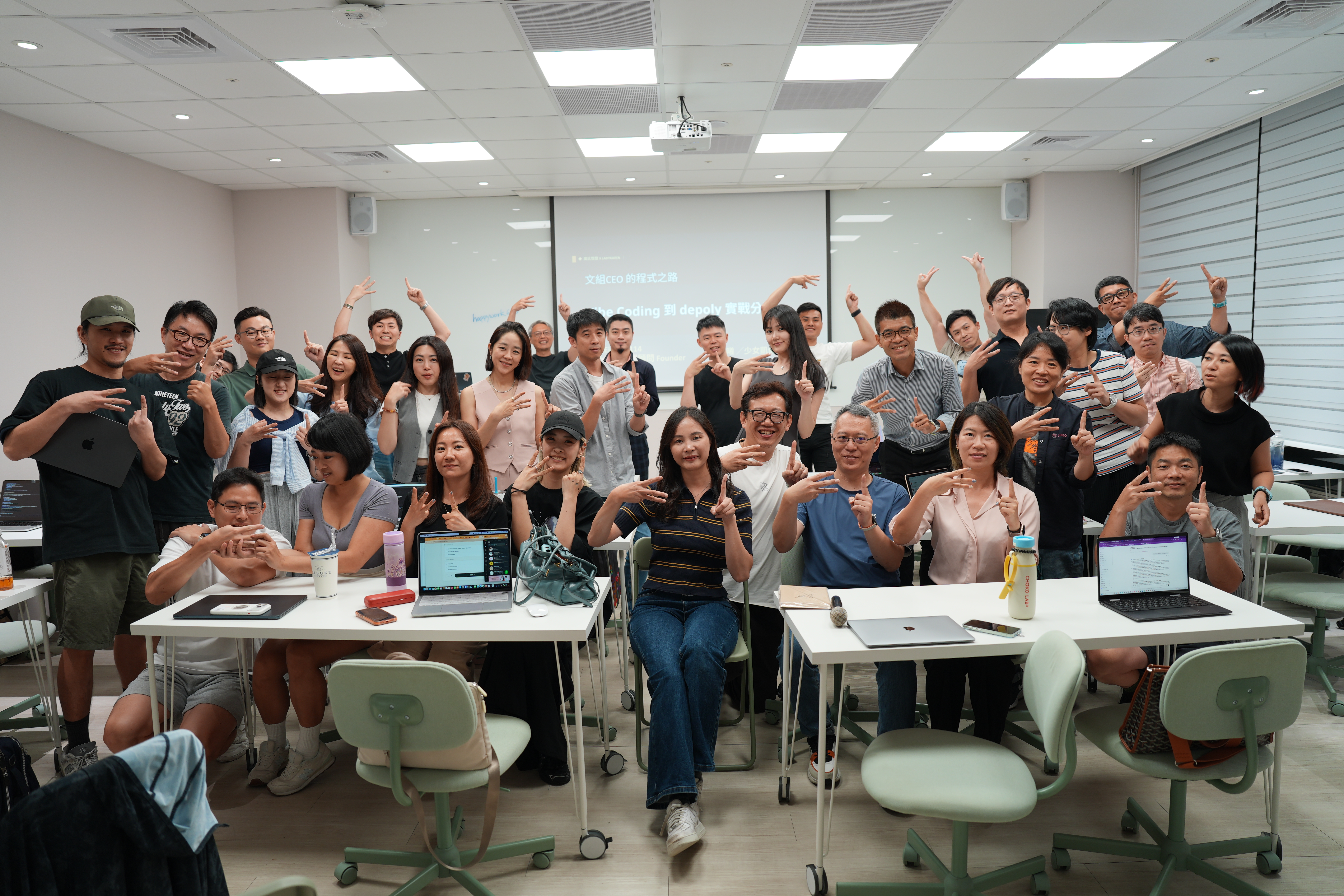
Today I finally completed NTU EiMBA's cross-batch vibe coding closed-door sharing!
Since learning to deploy in March, our company has built systems for finance, project management, and contracts directly—and more importantly, everyone can be a builder. We can pull projects from each other and establish an AI mindset.
Because I've benefited so much from this, I've been actively sharing it externally. Every time I help someone complete a deployment, I feel incredibly happy! Today was a success too!
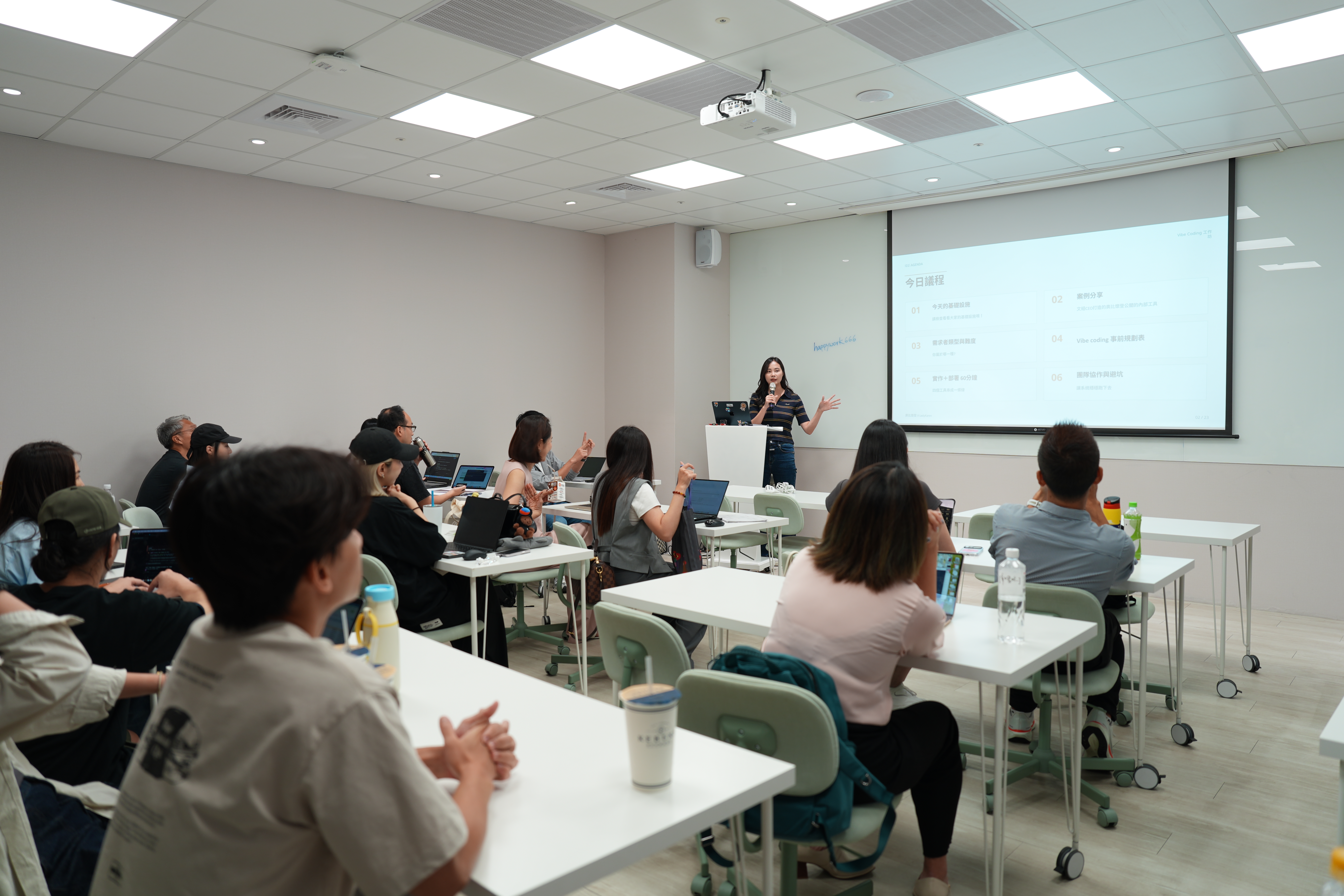
Why I Decided to Learn Vibe Coding to Deploy
Four years ago, I outsourced to engineers for the first time. With zero experience, I didn't know how to properly specify requirements or judge if quoted hours were reasonable. Every time I optimized a feature (like email notifications), it cost at least 100,000 TWD. I realized I lacked this capability—operational costs were too high—so I shut down the brand entirely.
Now vibe coding has arrived! But before March, I hadn't learned how to deploy. After handing frontend and backend code to engineers, it still cost 100,000 TWD. I was heartbroken, and the website dragged on for ages without going live. So I decided to master deployment. In a short time, I built multiple company systems. This post first introduces the cases, then shares my self-learning journey.
Company Background
- Company operations span public relations and entertainment industries.
- Within one month, the team developed and launched multiple internal systems: bonus payout system, project management system, official website, employee training platform, contract AI tool, quotation system, and more.
- These systems are now in use and have replaced some SaaS solutions, saving hundreds of thousands in costs.
Team Collaboration Mode and Infrastructure
- AI Mindset: Require all staff to learn AI thinking and Vibe Coding, supporting cross-device and cross-timezone collaborative development and modifications.
- Unified Account System: Fully use Google Workspace. All AI tools (Gemini, GPT, Claude, Vercel, Canva, etc.) and internal systems use the same enterprise Google account, achieving knowledge sharing and unified permissions.
- Deployment and Collaborative Editing: Deploy via Vercel; code can be accessed, modified, and co-edited by different people, forming a decentralized website maintenance model.
- Knowledge Transfer: Emphasize complete recording and retention of development processes and knowledge.
Case Studies

Case 1: Finance and Bonus Payout System
- Contract Management: After uploading a contract, AI automatically identifies dates, parties, payment dates, and payment schedules.
- Project Management: Contract information automatically flows into the project management section to track invoicing and payment progress.
- Expense Audit: Colleagues can audit transportation costs, labor insurance, meal expenses, etc. in the system.
- Cost and Profit Calculation: Expenses reconcile to corresponding projects, automatically calculating operational costs and gross margins, generating P&L and cash flow statements.
- Transfer and Invoice Reminders: Employees submit transfer requests and remind finance to issue invoices; the system generates PDFs as vouchers.
Special feature: An "eye" function can pixelate sensitive financial numbers (like bank balances) with one click.
Case 2: OBAsana (Internal Project Management System)
Replaces Asana to save costs (originally ~70,000–80,000 TWD per year). Core functions mirror Asana, providing daily workspaces and team project areas, supporting list, kanban, Gantt chart, calendar, and dashboard views.
Case 3: Official Website
Migrated from WordPress to our own developed website. Service items, strategy explanations, etc. are automatically generated by AI parsing company Google Drive project data—not manually written.
Article Publishing Automation:
- Organize articles and images into a single folder
- Use AI commands to have the system fetch folder contents
- AI automatically generates drafts, selects images, and publishes to the frontend
Case 4: Corporate Internal Learning Platform
Solves repeated onboarding explanations and reduces training costs. AI deeply mines company knowledge data in Google Drive, organizing it into a structured educational website. New employees learn following planned pathways; includes AI-generated quizzes with randomized questions to avoid rote memorization.
Case 5: Contract and Quotation Generation System
Provides a web interface where sales staff select and fill in customer requirements and services. After entering customer name and requirement options, the system automatically calculates quotes; clicking "Generate Contract" produces a complete contract PDF in the company's standard format.

As a liberal arts programmer with zero experience and no engineers on staff, that our team can collaborate this way is truly magical!
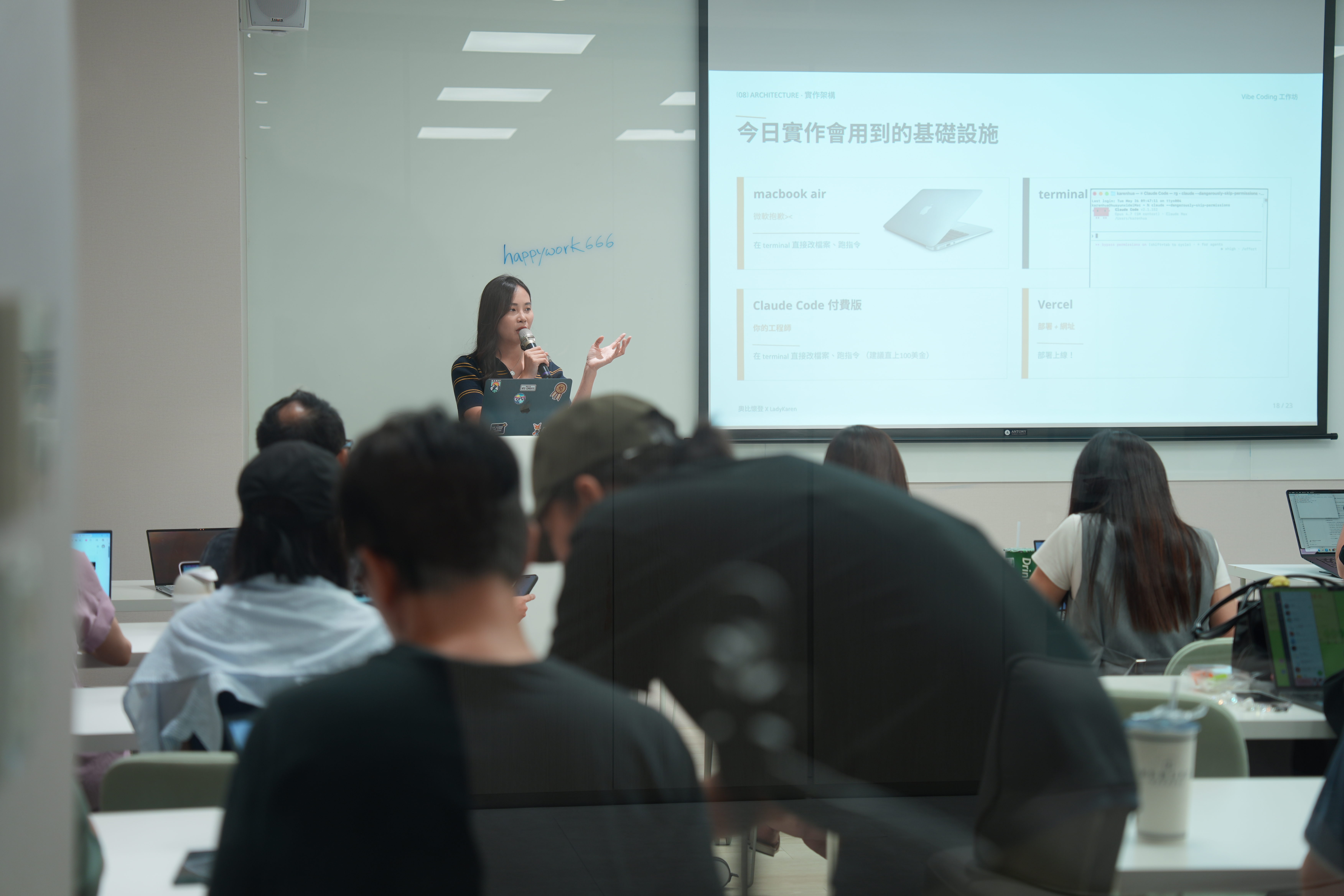
Tools Used
- Mac series
- Claude Code terminal
- Vercel for deployment
Learning Timeline
| Date | Milestone |
|---|---|
| 2025/10 | Learned Google AI Studio |
| 2026/2/21 | Studied Claude + Open Claw during Lunar New Year |
| 2026/3/4 | Explored terminal, Claude + deployment |
| 2026/3/15 | Built company finance system + OB project management tool |
| 2026/04 | Taught colleagues Vibe Coding + launched workshops |

Five Steps of Vibe Coding
- Identify the Problem: Such as cross-platform reporting causing missed entries. Finance was scattered across 7–8 platforms: Simpany, nuieip, Asana, etc.
- Think of Solutions: Decide to integrate multiple systems or build an all-in-one platform, with the core goal of "no missed entries."
- Analyze Current Workflows: Analyze what different roles (business, finance, operations) do in the finance process and their pain points.
- Conceptualize Architecture: Plan relationships between project costs, contracts, sales, and other modules.
- Build and Deploy: Use rapid deployment and continuous optimization; launch the minimum viable version first, iterate daily based on usage feedback.
My Self-Learning Philosophy
Metalearning: Understanding how to learn something new. When learning something entirely new, I believe in "metalearning"—first understanding the domain's communication language and knowledge, allowing myself to quickly integrate into that field's thinking mode, then take action, try, and learn. Through repetitive hands-on practice, I expand and deepen knowledge boundaries.
"From Self-Learning to Teaching Is True Mastery": To understand the essence of something, beyond learning it yourself, you must share it with others. That's true mastery.
Consult Experts and Continuously Break Through Learning and Sharing: "Seeking answers within wrong assumptions only yields wrong solutions." So learning something means consulting experts to quickly break through blind spots and expand cognitive boundaries.
Learning Vibe Coding to deploy has truly brought immense change to my surroundings, and team collaboration is invaluable. We're not just learning new technology—we're shifting mindsets and strengthening self-learning capacity. Previously, our communication was execution-focused, but now it's "How can we be more efficient?" "How do we find solutions?" "How do we reflect on our workflows?" "How do we transfer knowledge?"—Building an organization with a growth mindset is truly the luckiest thing!