I took on the task of writing a book. It was my first time writing one, and having to express myself in the first person made me quite nervous yet excited. However, after listening to the story for just two hours, I went home and wrote the foreword:
A seven-tsubo space made of wooden boards, filled with vibrant colors, humble desks and chairs where they learn about the world, a blackboard on the wall where I guide them step by step to understand English, each additional word memorized and sentence learned adds a bit more to their competitiveness.
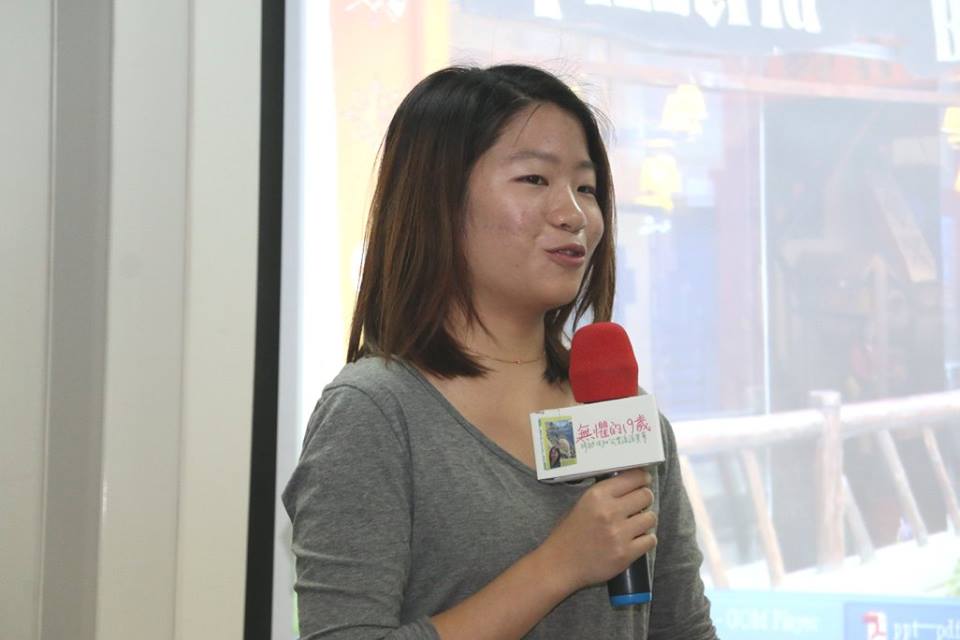
Sunny, 19 years old this year, wanted to make good use of the summer break. In 2016, I dragged my luggage alone and traveled from Taiwan to Peru to serve as an international volunteer, going through 3 layovers, 4 cities, crossing 18,300 kilometers to pursue myself. This place is quite different from what we imagined.
There's a huge gap between rich and poor, with a single street distinguishing slums from wealthy neighborhoods. The poor have no water, no electricity, and can only study and learn during the sunny mornings. In the classroom they learn English, while I get to know a different Peruvian society through them.
"If you don't try many things, it's a waste of flying so far." When people hear that I ate crocodile, guinea pig, and insect larvae—things I wouldn't normally encounter in Taiwan—many find it hard to imagine and tell me I'm so brave. But if you don't do many things, you'll miss out. Besides, how can you know when you'll come back again? You can only seize the moment.
This is my life story, and I hope it can give you who want to broaden your horizons abroad some courage. Whether you want to study abroad, do an exchange program, or serve as a volunteer, I hope this book can give you more direction to find yourself. Dreams only become real when you make them happen.
===

After spending three to four months going back and forth revising the writing, during this process I came to understand how families in Taiwan business circles interact, and thus I wrote the following afterword:
"Watching you accomplish what we didn't dare to do when we were young—that itself is a kind of happiness."
One message after another on WeChat, all full of pride and relief about Sunny. "On the day she stood on the podium, looking at the photo she sent back—a quiz she had made herself—that child who used to always stay by my side is now standing on her own," Sunny's mother said.
Mr. Gao and Sunny's mother, who have lived in Shanghai long-term, previously worked in the cram school industry. About 20 years ago, the company dispatched them to mainland China, so when Sunny was about two years old, they left Taiwan and she attended local elementary, middle, and high schools.
Sunny's mother has met many Taiwan families dispatched to mainland China, and she found that they generally have only a superficial understanding of abroad—knowing only through books, not having actually been there. But she believes that to truly understand a culture or city, you must actually go there to know what the local people think and how they behave.
Influenced by Shanghai's atmosphere, most parents there "raise their children wealthy," hiring maids to help with housework, cleaning, and cooking. Children learn early to order the maids around, treating themselves as princes and princesses, not carrying their own backpacks, thinking that's the maid's responsibility. They develop spoiled personalities from childhood—impolite, unkind, and aloof. But Sunny's mother and father didn't do this.
They raised three daughters, with Sunny as the eldest. From childhood, they cultivated their reading habits. While other children their age clamored for toys and lacked patience, their children knew how to sit quietly by themselves, not making noise or disturbing adults, behaving well and doing their own things. Sunny's mother said she never viewed her children as princesses, believing that cultivating independence was very important.
When it comes to travel, Mr. Gao always chooses the cheapest flights and hotels. A family of five plus grandmother squeeze into cramped spaces, even lying sideways if necessary. Earlier this year, the family even spent a whole month in the Japanese countryside—the nearest convenience store required a 40-minute walk, the only transportation was a bus that had to be booked in advance by phone. This educational approach aimed to let the children actually experience how people live in different places, cultivating their worldview from within, and even developing their exploratory abilities.

Beyond this, unlike most Asian families where children distrust their parents, are unwilling to share their problems, and are often in a rebellious state, Sunny's mother can always chat with her children openly, sitting together to discuss what each of them thinks about various matters. Her daughters are willing to share their personal concerns, believing that discussing things with their parents will yield meaningful results—it's a worthwhile conversation. This way of relating is quite rare for modern families.
The moments of writing the book were particularly special. Our first meeting was at a tea house on Yongkang Street, where Sunny's parents appeared with their three daughters, plus me, someone they met for the first time, all discussing Sunny's South American journey together. Friends around us found this curious, yet the three children found this way of doing things completely natural. I later came to understand that because family time together is limited, they treasure every moment and are happy to share about themselves.
Once, Sunny's mother and Sunny sat at the same table in front of me, one on my left and one on my right. Whenever I asked a question, I could see them look at each other and smile, talking about the amazing process of their South American trip. When I asked about their friends' surprise at letting their child fly alone to South America, Sunny's mother said with relief, "Because I trust her..." Although during the process there was some worry—after all, this was the first time in so many years that Sunny had traveled to South America alone.
Like when she went to the Amazon with no internet, her parents on the other side of the earth had no word from her and felt very anxious. But two days later, when they checked, they found photos of Sunny jumping into the Amazon River swimming, laughing brilliantly with volunteer friends. That's when they understood their daughter had really grown up. Sunny also said with her characteristic shyness and a smile, "I mentioned there would be no internet earlier, didn't I?"
Sunny's mother described that in Shanghai, about 80% of parents don't dare to let their children become independent and venture out on their own, thinking children in unfamiliar places are dangerous. Because children studying in Shanghai mostly have dedicated transportation, going straight home after school, their living sphere is relatively simple, only experiencing home and school. Taiwan parents are also very used to this way of living. So beyond this point-to-point life, people feel very uneasy—even taking the subway by themselves makes them uneasy.
Therefore, everyone was quite surprised when they heard Sunny was going to Peru alone. Sun, one of Sunny's mother's good friends, was like this. She initially thought it was dangerous to go to South America alone, so she contacted local friends wanting to look after Sunny nearby. She gave Sunny all contact information, even offering to send someone to pick her up and invite her to dinner. Sunny politely refused all of it, believing that as a volunteer, if she encountered something she truly couldn't handle, then she could ask for help. How difficult this is for a 19-year-old!
This independent and self-reliant personality, and compared to peers her age, her relatively mature way of handling human relationships, all originate from family upbringing. Sunny herself believes she is an independent child. She described that when she first went to university, it was also when she moved from Shanghai back to Taiwan by herself. Most of her classmates had left home for the first time, but sometimes "home" was just the distance from Hsinchu to Taipei—just 40 minutes by high-speed rail. It's still easy to see family. So in her view, her classmates' worries are actually quite trivial.
"Because, watching you accomplish what we didn't dare to do when we were young—that itself is a kind of happiness." Sunny's mother's WeChat is filled with daily life with her children. During Sunny's time in Peru, she documented her feelings and her child's growth through posts, from which you can see relief, pride, and deep satisfaction. Having such rare family affection is truly moving.