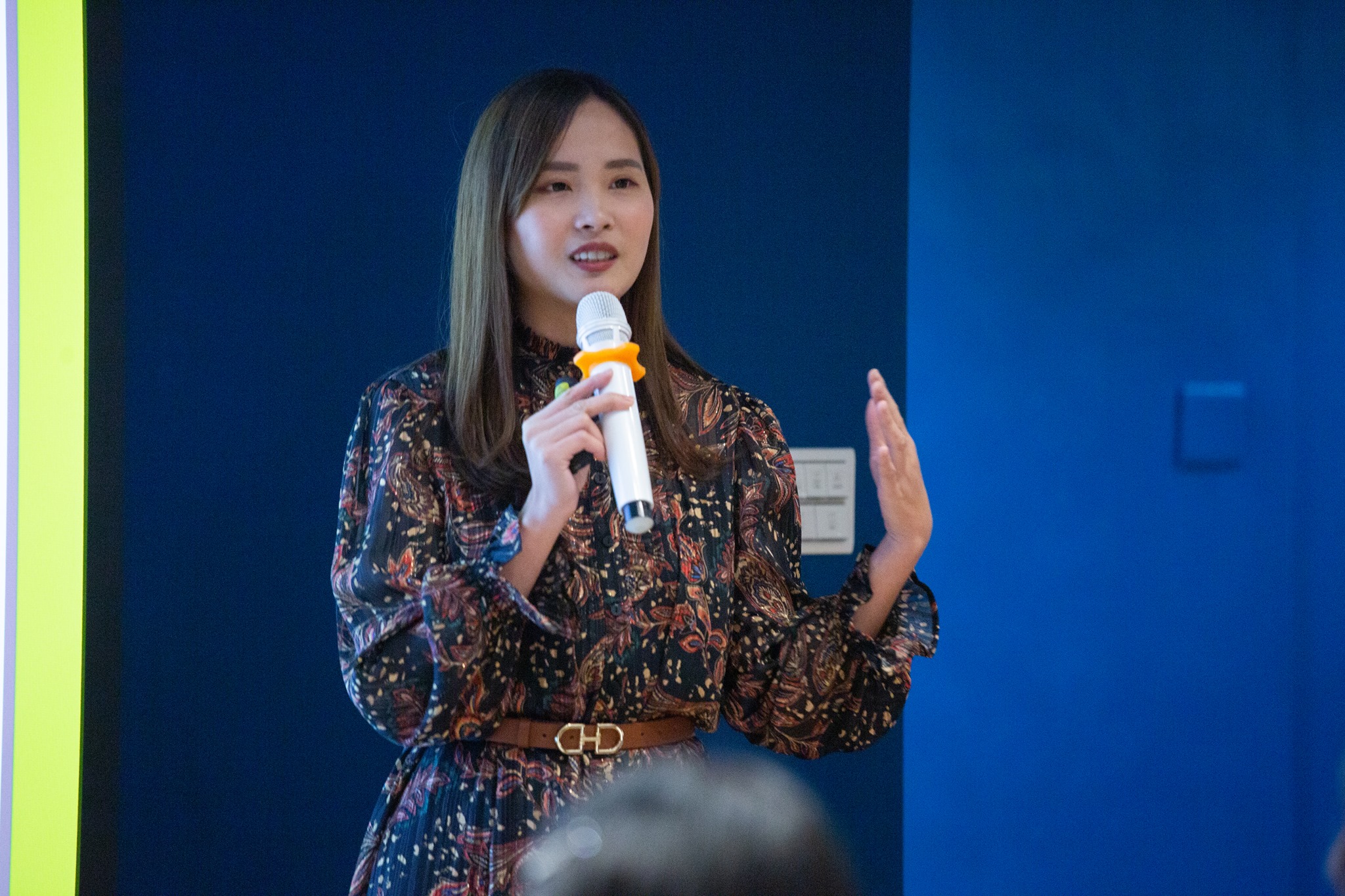
Seven years ago, while still a journalist, I chatted with an entrepreneur who mentioned he was a cautious person because a single wrong decision could cost the company 30 million.
"Wow, I'll never earn 30 million in my lifetime."
: "Don't say that. Never underestimate yourself."
"Don't underestimate yourself" was rare positive language I received during that period. So I thought, if I could achieve that someday, it would be great. But I wasn't talking about chasing numbers—I wanted to become a person like him.
He had no idea that over these years I'd been quietly moving in that direction, learning, taking courses, participating in various accelerator programs, thinking through and implementing various business problems... Like a seed slowly sprouting, in 2025, the companies I founded finally surpassed 30 million in annual revenue.
Because it felt so meaningful, I recently told him this in person.
"#I Really Love This Story"—A summary for 2025, stepping into 2026.
Looking back, how did I decide to start a business, and how did I navigate through all the hardships to get here?

–
In 2018, as a Journalist
I covered the education beat and frequently searched for education-related stories. I was fortunate to interview many startups combining education and learning at the time—many are still well-known today, some so large they no longer accept interviews. During those interviews, I deeply felt the positive energy of startups. Compared to the mire I was living in, I thought, if I could one day become part of this vibrant community, that would be amazing.
I then actively participated in startup-related organizations and events—at my peak, over 8 events a month. I met many people and should be deeply grateful to XChange for accepting me. Starting as the brand group lead, I implemented various activities and projects, broke through my circle, and got to know many tech professionals. This group later became my closest friends and business partners.
Thinking back, participating in XChange was the starting point that changed my life path.
Next year for the tenth anniversary, I'm also participating in an interview. I'll share that story then.
#An Entrepreneurial Journey Born from Interest
2019-2021: Building Book Clubs
After writing online for some time, Blooky Publishing invited me to publish a book. The publisher encouraged me to organize simple offline events to avoid the situation where ten thousand people respond but only one shows up. The publisher was very kind—authors could rent venues for free. So I thought about how to combine my interests and goals, and thus organized cross-disciplinary book clubs.
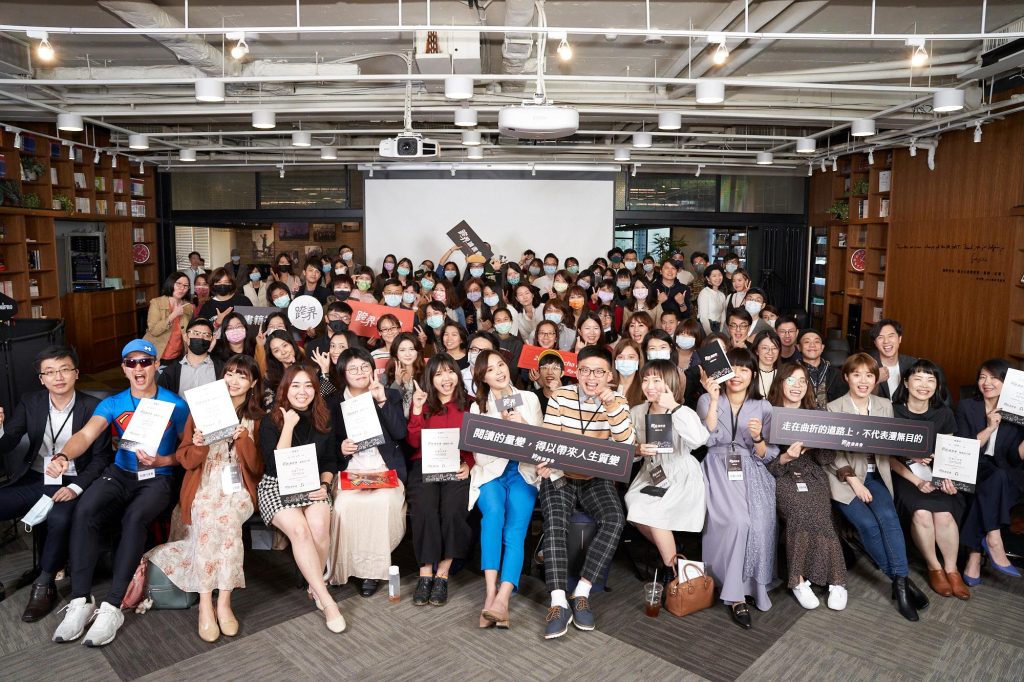
From 1 event to 200 events, from individual events to a subscription model, from instability to stability—this was a process of business thinking and decision-making.
Initially, I just wanted to solve the problem of users having to repeatedly register for each event. As someone who pursues efficiency and believes in MECE, when looking for solutions I searched for "a way to not have to repeatedly register for events." A term appeared called "subscription model." So I searched "subscription model + book club" and the first result was Fan Deng. I thought, with such a successful case, why not run a subscription-based book club? So I quickly launched a subscription service on PPA.
Of course, members initially had many misunderstandings. I also spent time communicating with them until they gradually appreciated the subscription model's benefits.
The subscription started with a single plan. As activities and demands increased, I launched four pricing tiers to meet everyone's needs. Later I learned this was called CRM management.
Also in 2021, things went wrong with my full-time job. I realized I couldn't juggle anymore and decided to resign from journalism and focus entirely on entrepreneurship.
One month after leaving, I was fortunate to receive 700,000 NT from Taipei's incentive subsidy program.
Since I had zero business experience at the time, it wasn't until I proactively took a 13-week accounting course that I discovered these plans were actually losing money. The subsidy was keeping the company from collapsing immediately.
My original pricing was based only on intuition—"what users could accept." But the correct approach is to first calculate costs and margins, then price and market accordingly.
Overall, in this phase, I learned by doing. From a pure writer, I began developing business thinking, decision-making skills, and filling various gaps. Through hands-on experience, I tried subscription models, CRM, and cost-based pricing.
#Finding Answers in Wrong Assumptions Only Yields Wrong Solutions
After the book club had developed for some time, I encountered some business collaboration challenges. I figured I might as well build a website myself. But back then, unlike now when you can use tools like Vibe coding, and there weren't many all-in-one platforms (like Teachable). So I started evaluating the possibility of outsourcing to engineers.
I considered three options: a full-time engineer, outsourced engineers, or buying a template. Eventually I went with an outsourced team. But since I had zero website-building experience (WordPress at most), I had no idea how to collaborate with engineers. It was completely playing above my level.
The website eventually launched on time with members, subscription payments, and basic functions working. But there were always glitches.
For example, members wouldn't receive confirmation emails after signing up or registering for events because I hadn't ordered that feature. Every time I requested something new, it cost 100,000 NT, and after two or three times, I felt I couldn't handle it. The problem was my lack of understanding—whether the hours and hourly rates were reasonable, or what long-term maintenance and optimization we needed. It was beyond what I could afford.
Meanwhile, I also wanted to develop physical products, but I lost over 500,000 NT on that anyway. The subsidy ran out completely. I learned a crucial lesson: "#Finding Answers in Wrong Assumptions only yields wrong solutions." This isn't something hard work can fix—it's a knowledge deficit.
After realizing this required long-term learning and introspection, I decisively ended the project, planning to wait for the right moment, to prepare myself, then restart.
#Breaking Through the One-Person Company Mindset: Flow to Wealth GPS
Starting in 2021, I wanted to expand from a one-person company to a team. Beyond wanting to understand enterprise management, it was also because during pitch competitions, judges told me that if a company relies on the founder's talent, it won't grow big. I understood the feedback intellectually, but didn't know what to do.
For three consecutive years, most of my employees left within a month. Feedback was always that the pace was too fast and too chaotic. Many had questionable attitudes. Plus, my mindset back then was shameful: "Students pay to take my courses, so why should I pay employees a salary just to teach them?" Such a terrible mental block lasted until early this year when I seriously worked on removing it. By year-end, I had 6 full-time employees, and Pilates had 6+7.
The turning point was reading Flow to Wealth GPS. I'm a "generator genius." In the wealth lighthouse positioning, I'm a "yellow light," but to upgrade to green light, I need to "build an enterprise," "adjust the enterprise's rhythm," and "align the pace with flow"—in other words, establish rules, replicate skills so team members can follow them.
But how could I, someone who left corporate life to become a freelancer and always broke rules in organizations, become someone who establishes rules and leads others to follow them? It seemed like a contradiction, pure fantasy!
So my demons and anxieties stuck around for a long time: "I don't think anyone should listen to me," "do things my way," "I don't think I'm right." These insecurities kept surfacing repeatedly, keeping me awake at night, making me frequently depressed. I even brought these up in psychotherapy until I joined KX Pilates.
At the time, I joined KX Pilates simply because I liked it and saw long-term market trends. Since I had retail experience as a kid, I naively thought opening a studio wouldn't be too difficult. After franchising, I received over 50 different teaching documents covering operations, systems, instructor management, etc. The founder personally walked us through everything one by one, syncing and doing 360 reviews. Terms were clear, and I trained at the headquarters before opening.
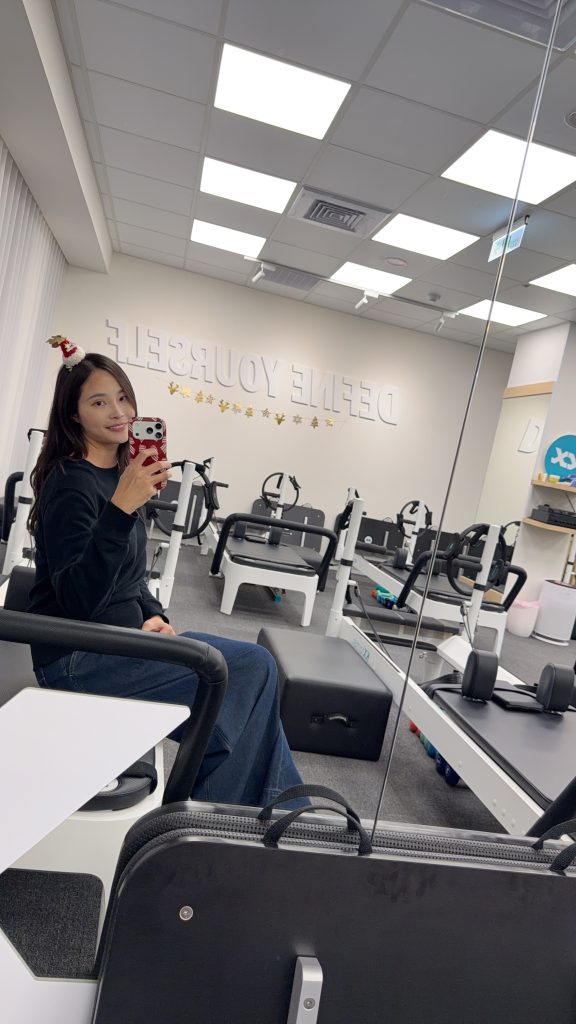
My hands-on nature combined with shareholders who had experience managing hundreds of people led them to think learning and optimizing alongside new staff was normal. This completely opened my heart and dissolved my demons.
Then I understood: enterprise management is the transmission of knowledge.
Moreover, I learned from my last employee who quit after a month that whenever enterprises use employee resources—like not providing a desktop so they use their phone to contact suppliers—the company is taking advantage.
After that, I spent time having people observe and interview me and colleagues who loved working here (current and former). We identified everyone's personalities and traits, identified who naturally stayed, and the top three characteristics were #Optimism #Accountability #Action
#Optimism: Believe things can be solved before they can be solved.
#Accountability: Ensure problems get solved positively, effectively, with results.
#Action: Not just proposing, but actually getting your hands dirty to solve.
#Enterprise Management is Knowledge Transmission
Now I run Aubree Walden PR, doing annual marketing, brand PR, crisis management for clients, plus Korean cheerleading and entertainment-related work. Over 60 corporate clients annually.
In 2025, I truly understood that knowledge transmission is contextualizing knowledge, and I broke through the management barriers.
Because I started as a writer, became a published author, an online course instructor—all stemming from my ability to contextualize knowledge and writing skills, which happens to be what I do best.
So I did my best to translate everything I've executed—knowledge spanning writing, marketing, PR, sales, business development—into knowledge documents, contextualized frameworks, SOPs. I gradually taught these to team members while asking them to document processes for future colleagues.
I also introduced Asana for project management, transforming these SOPs into visual dashboards and progress bars. I continuously communicate internally that project management's purpose is to keep us in sync, to make the team and each other better.
I started daily stand-ups and weekly meetings, along with active training—AI tools and hands-on AI implementation. Things I once most resisted became organizational time to align work progress, values, and shared language. Not meetings for meetings' sake, but to align the organization, team, stakeholders, and individuals' values, letting everyone immerse in knowledge learning, growth, and contribution.
Unlike my past resistance to teaching team members old concepts, today I actively lead employees through the paths I've walked, helping them reach targets faster through experience, building individual competencies. Indeed, under this training, small partners can independently complete tasks. When I assign them new work now, the most common response I get is "I can do this!"
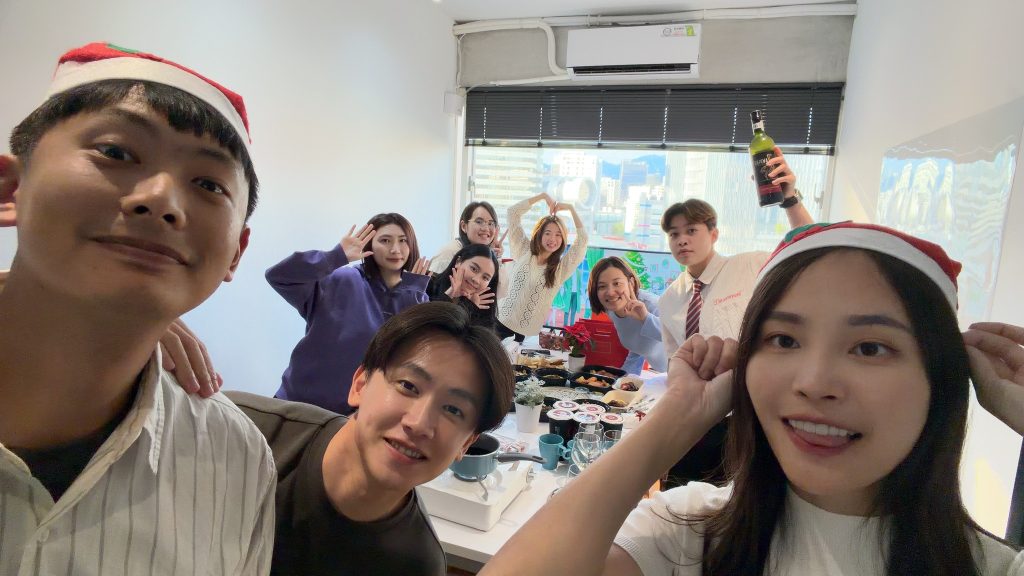
Recently, walking down the street, I suddenly realized that employees may spend more time at the company than at home. So creating a happy, safe, comfortable environment where partners can live well, be physically and mentally healthy, and together achieve tasks and goals, seems to be one of the most important responsibilities.
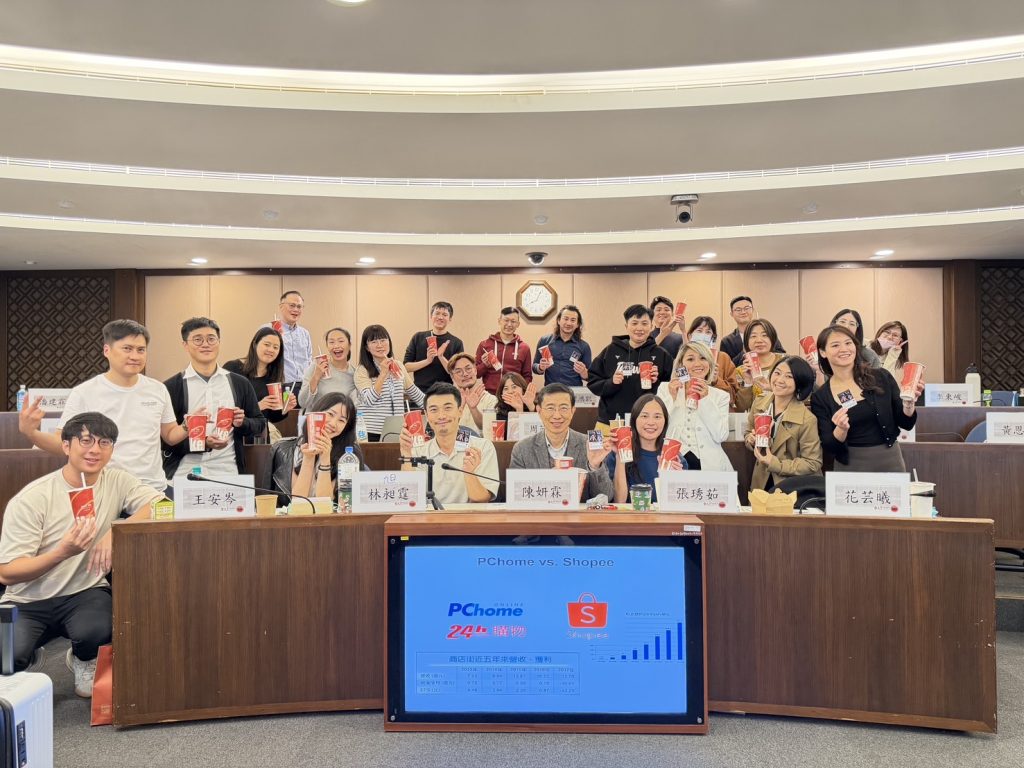
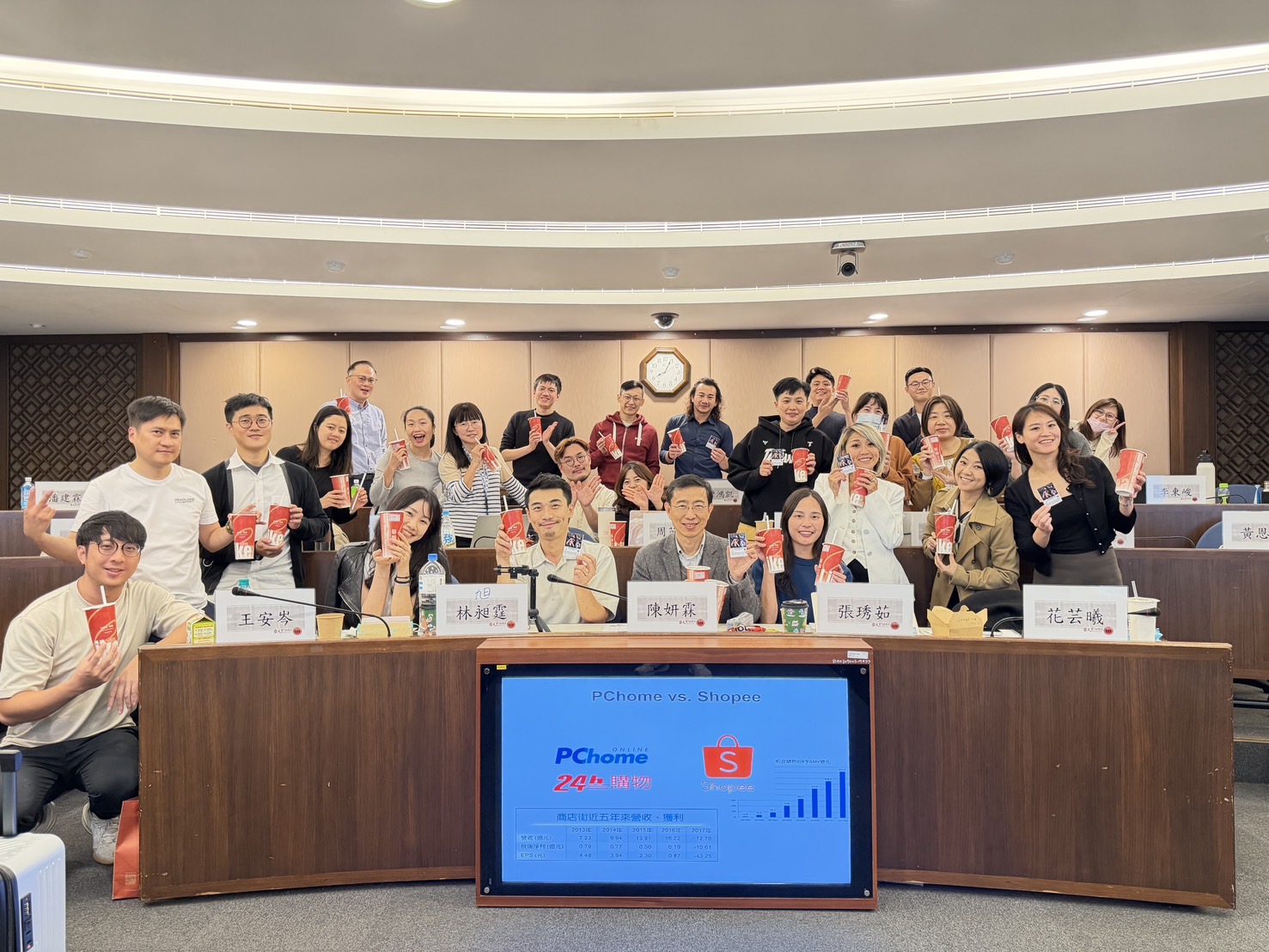
Of course, I'm also fortunate that in this process of finding answers, I got accepted to National Taiwan University EiMBA 114, giving me a group of entrepreneurial friends to learn solutions from each other.
The uncomfortable entrepreneurial process
comes from willingness to break through every growth ceiling
comes from willingness to let go of every unsolvable pride
comes from willingness to reflect on every contradictory knot
through entrepreneurship, in the process of thinking through challenges
I gradually became a better person
#Have I Become a Person Like Him??
I think the answer is yes.