
By Karen
《Noise》: The word "judgment" is generally used when people think opinions "should" be consistent.
Basically, I believe this sentence has already provided both a summary and the crowning touch to this classic work that returns after a decade-long absence. It's truly a wake-up call. Of course, the book contains many more stories and cases worthy of deep reflection. However, the matter of "judgment" constantly appears in our daily lives, regardless of whether things are big or small, or their sequence.

People want to "judge" something accurately, yet they forget to reflect back on what the "essence of judgment" truly is. 《Noise: A Flaw in Human Judgment》, published by Tianbao Culture, strikes at the core and leads readers to reflect again and again. For me, it's quite exhilarating, as it elevates and expands my own perspective.
《Noise: A Flaw in Human Judgment》is a collaborative work by Nobel Prize-winning economist Daniel Kahneman and McKinsey senior partner Olivie Siebony, marking their masterpiece after a decade-long absence. From reading the initial sections, I've already come to deeply appreciate the heights and depths economists reach. I'm deeply grateful for this book, which guides me to have the opportunity to layer by layer analyze the levels and dimensions of my own thinking through the various cases in the book.
First, the book explains that "judgment" assumes that if the person making it has sufficient ability, they can make the "correct" judgment. However, conceptually, we must admit that "no one can ever be certain whether a judgment is correct." For example, policies might lead to different decisions due to "different temporal and spatial contexts."
When is it truly "judgment"?
When is it "decision"?
What kind of matters should be considered "common sense"?
And whether what you consider common sense is "new knowledge" to others—this book possesses the magic of such back-and-forth reflection. The prerequisite is your willingness to quiet yourself and reflect and do the work.
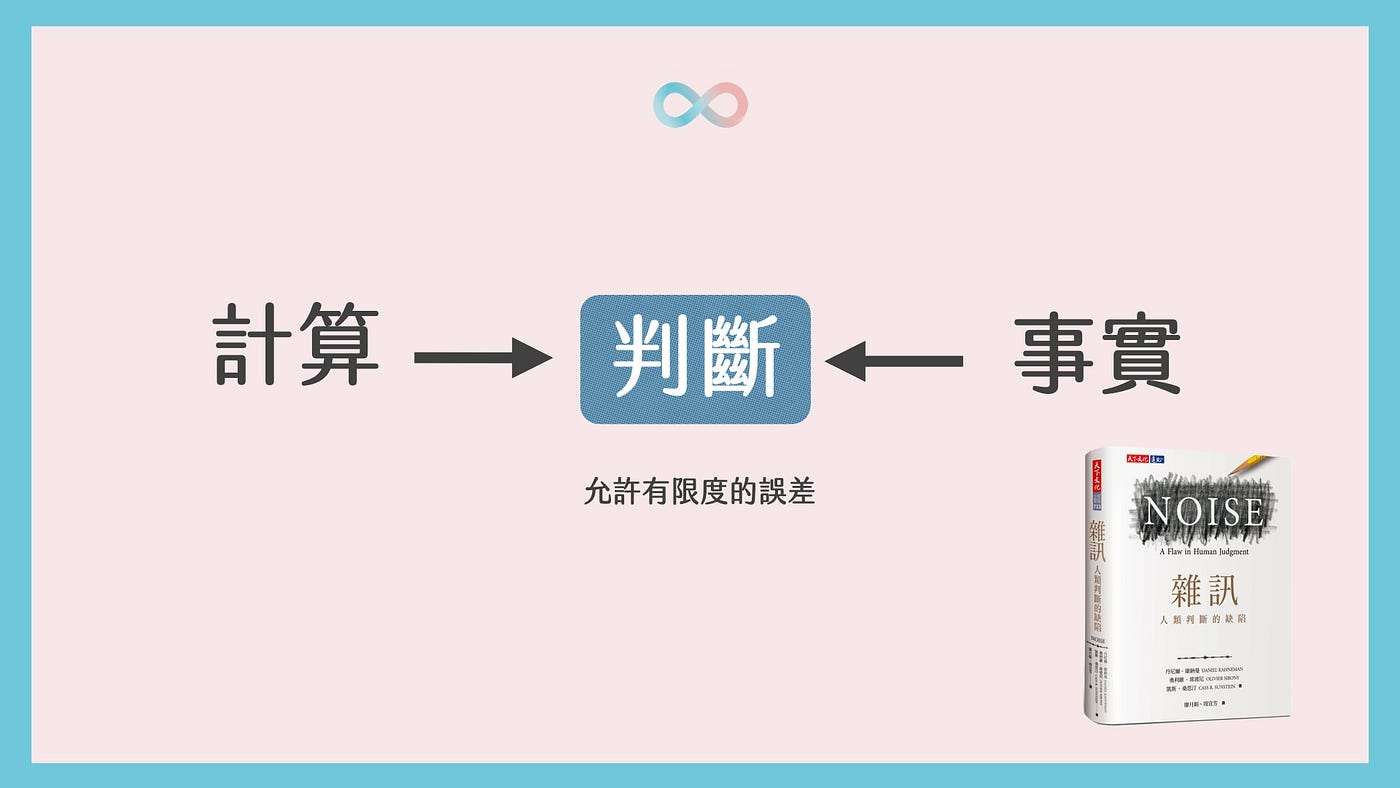
I particularly love the concept mentioned in the book:
Judgment problems lie between fact and calculation, and allow for limited disagreement.
Why is it "limited disagreement"? Because when a group of people's opinions are polarized or can be clearly divided into distinct opinions, that is not called judgment—it's called "decision." However, how much disagreement between judgments is acceptable? That itself is a highly subjective matter. And as mentioned earlier:
There is never a correct answer, only experience
If you fantasize that there are standard answers in the world, then becoming a robot might be easier, but that's impossible. The difficulty of "judgment" isn't merely "making a judgment," but bearing responsibility and accountability after the judgment—for oneself, for the organization, and even for the surrounding world.
Even though it falls short of ideal
Or isn't perfect
Recently, because I'm in an early startup stage, I've had multiple occasions to judge various situations, and even guide young colleagues to think from more comprehensive angles.
Although what I call judgment might seem like small, trivial matters to seasoned professionals, for those caught in immediate difficulties or situations, everything small always feels big.
If I were to assess "why can't I judge," or "why is my judgment always falling short of the ideal," the answer is simple, very simple: "lack of experience."
How much I hate that
Who wants to be thought of as lacking experience?
How much I hate that
Knowing that admitting lack of experience could let me off the hook
Why don't I?
The answer remains the same: "lack of experience"

Because past experience cannot guide you to judge "If I give up on this now, will it bring a massive change to my life?" "Will my life end here?" (It absolutely won't)
Because of lack of experience, people worry, and thus make worst-case assumptions for themselves. In psychology, this is called the "Wallenda Effect."
This effect comes from a high-wire performer named Wallenda. Throughout his life, he performed many times. While walking the tightrope, he was not influenced by the audience's applause or gasps—he simply took each step well. But at age 73, wanting to leave a special memorial for his lifetime, he decided to perform on a tightrope stretched between two 20-story buildings in Puerto Rico.
However, he lost his footing during this performance and died.
His wife, in an interview afterward, stated: "I knew he would fail" because before the performance, Wallenda kept repeating "this performance is important, I cannot fail." Unlike his previous successful experiences:
In the past, he only focused on perfecting the process of details, rarely considering success or failure as an outcome
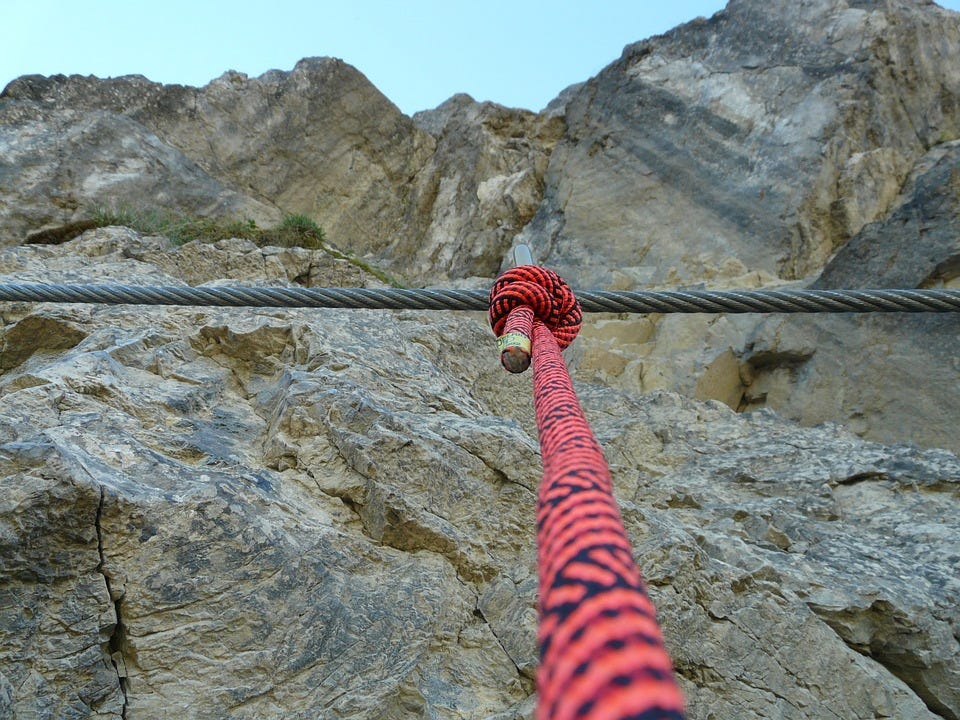
Later, psychologists termed this mindset—spending mental energy worrying about errors in success while neglecting the effort process—the "Wallenda Effect."
This mindset further affects one's "judgment ability." One or two faulty judgments might be acceptable, since "limited errors are allowed." However, the "limit" itself is quite subjective. Every person's limit differs; every team's limit varies. How to "judge" and adapt ourselves to various situations, match our circumstances, and exercise our abilities well is a question every person must urgently take seriously.
Recommendation Rating: ★★★★★