By Karen
In April 2019, I organized a cross-disciplinary reading group using event-based single-point registration through Accupass.
The simple mechanism was that each person needed to prepare a presentation with 20 PPT slides, with a 20-second limit per slide. Everyone had to present on stage, so each session was capped at 12-15 people with no audience participation allowed.
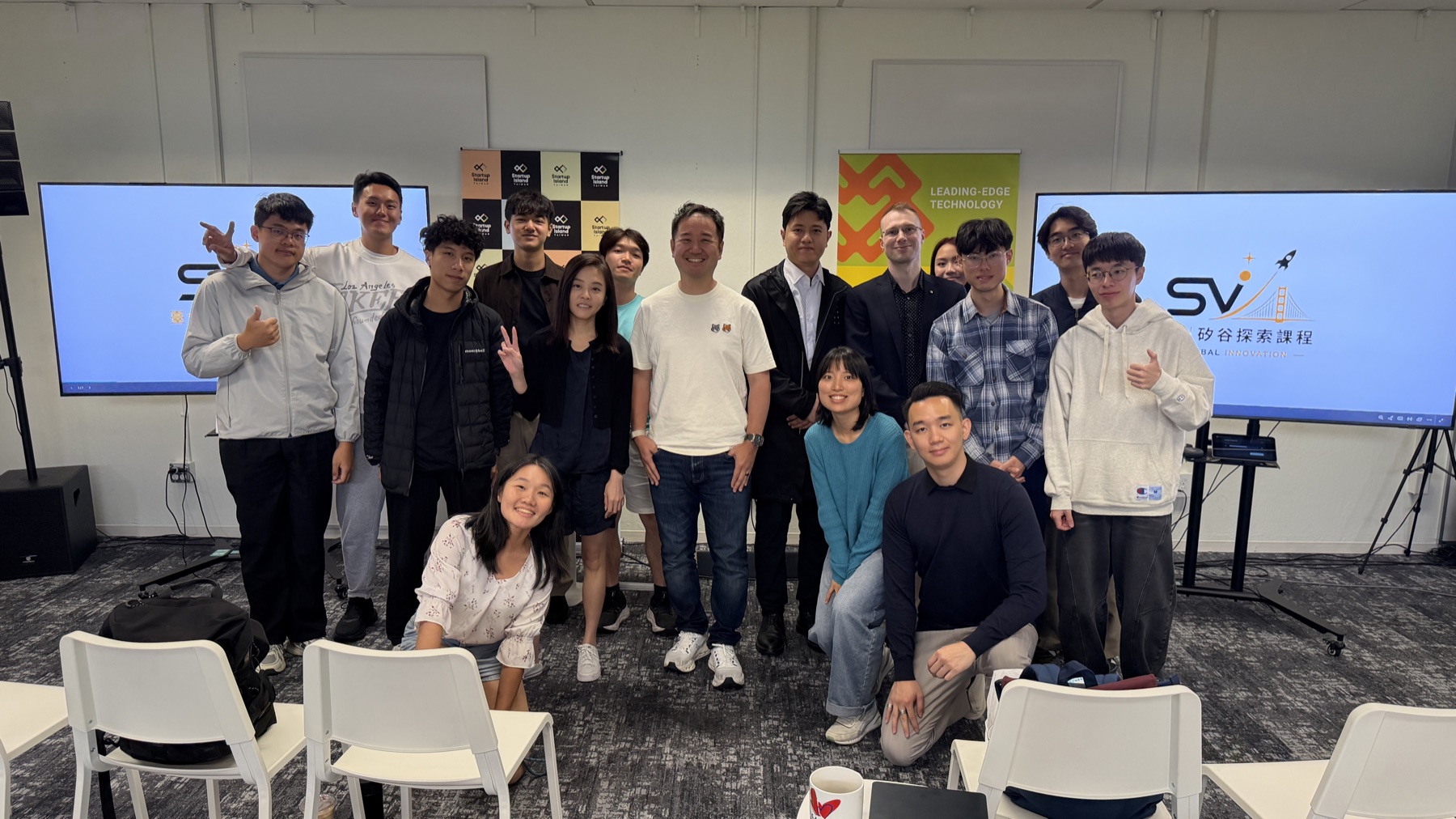
 The eternal first event photo.
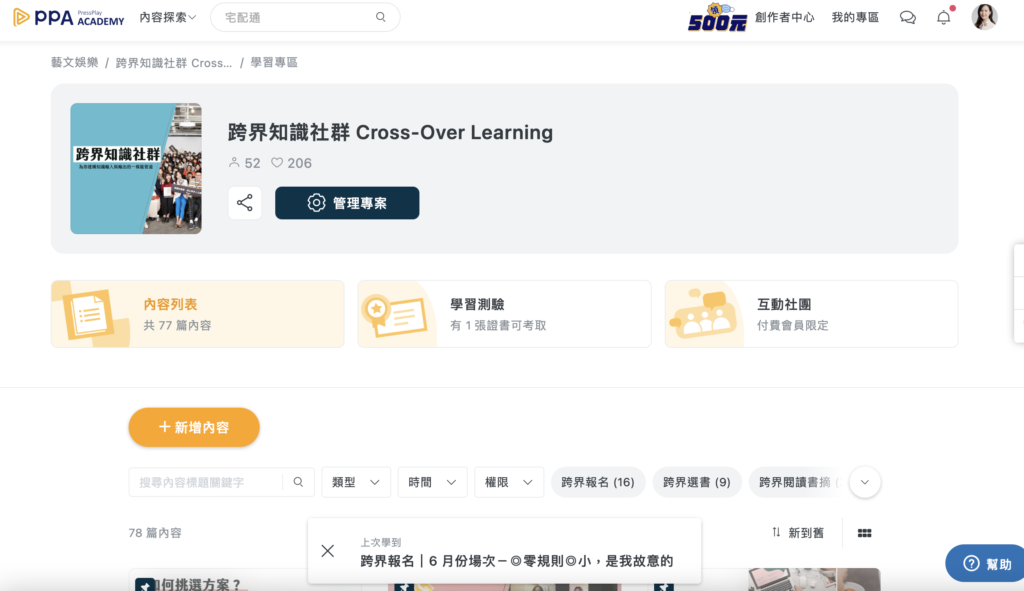
In June 2020, I migrated the cross-disciplinary group to the Pressplay platform, adopting a subscription model as the mechanism for members to join.
Simple Data Sharing
Gender ratio: 30% male, 70% female
Age distribution:
21-25 years old: 10%
26-30 years old: 30%
31-35 years old: 40%
35+ years old: 10%
In March 2021, the cross-disciplinary reading group gradually transformed into a cross-disciplinary knowledge community, offering not just reading groups but also cross-disciplinary meetups, internal training, and various clubs—all serving subscribers.
After running the project for a year, I want to share with you a comparison of these two operational approaches, and how we used community mechanisms to manage members while breaking through the platform's lack of a physical event registration system to achieve both member management and event registrations. It may sound like trial-and-error to some, but I'm worried this process will be forgotten if I don't document it now, so I hope this article can provide others with our experience. (If you have smarter methods, please don't hesitate to share!)
Learn more about the cross-disciplinary knowledge community
Table of Contents for This Article
-
Why did we start the membership model?
-
Was the transition to subscription smooth?
-
How should a membership model grow, rather than just stabilize?
-
Breaking through platform limitations by implementing an initial CRM through various platforms and Excel
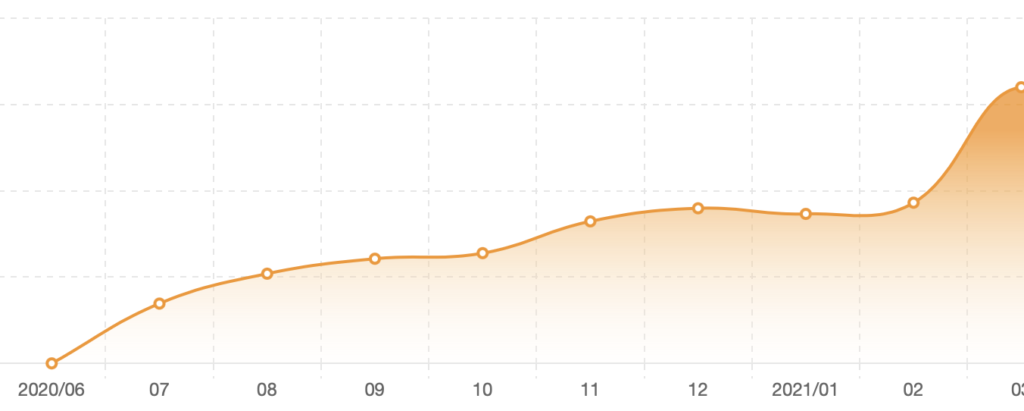
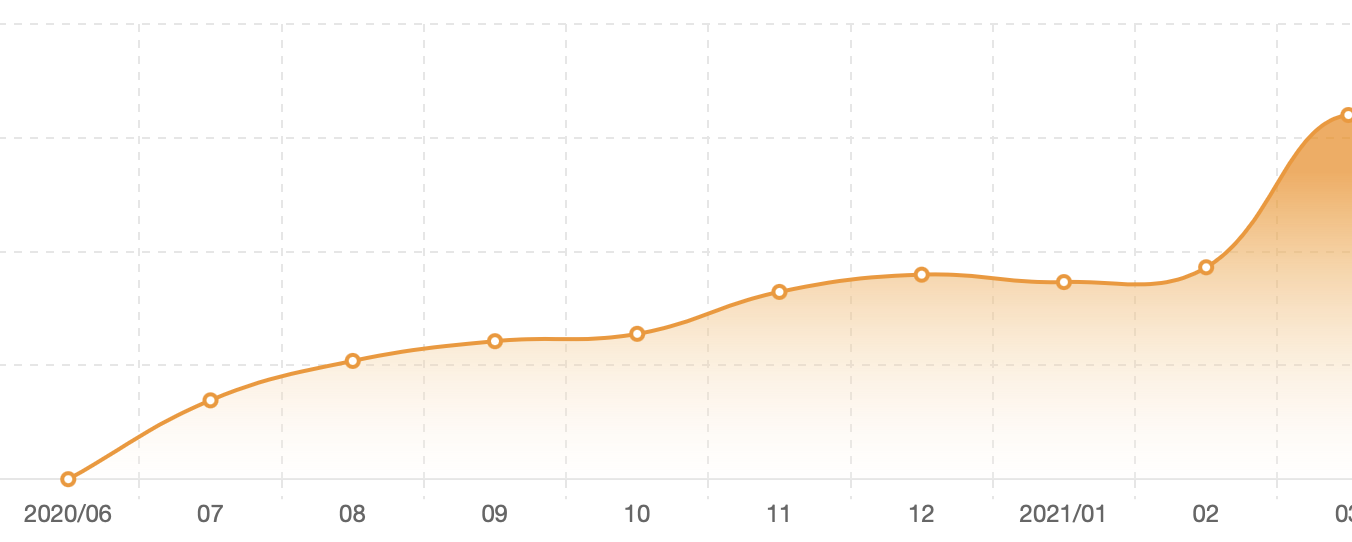
(Image: Growth trend chart for one year of subscriptions; the project was revised in February and saw increased growth in March)
Why Start the Membership Model?
Around March 2020, our event attendance suddenly doubled compared to the previous year. To accommodate the influx of participants and ensure everyone could join, we shifted from hosting events roughly every eight weeks to needing two events per month just to handle the crowds.
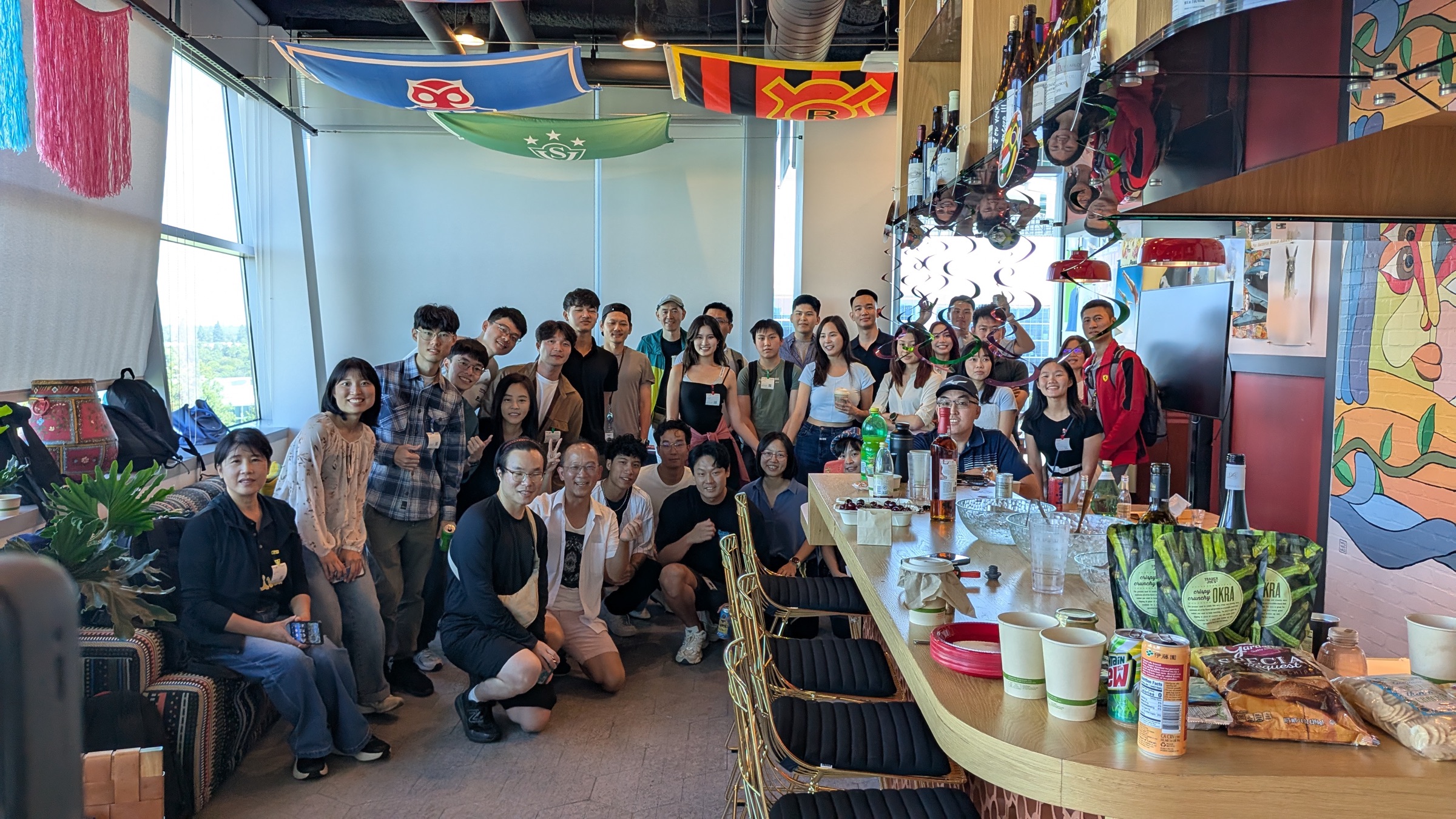
 Large-scale event held in early 2021.
However, I discovered a significant problem: there was no complete mechanism to retain these participants. Most people would keep attending, but since events lacked consistency, each single-point activity required starting from scratch with promotion and registration. The uncertainty of whether the next event would even happen gradually filled me with anxiety.
Because if I got lazy and didn't organize anything, the whole thing would end.
And honestly, I'm a very lazy person. (Really.)
At this stage, we only had the role of "little angels"—volunteers who mainly helped collect presentations and reminded everyone to submit them before events. I handled all other administrative tasks and hosting personally, and did so for the entire first year. Later, after the transition, I began cultivating hosts and angels, with hosts able to advance to independent hosts and host supervisors—five different levels total.
To break through the limitations of single-point activities, I explored many approaches and thought deeply about how to maintain consistency.
Then in June, inspiration struck. I thought about a subscription model, though I wasn't sure if subscription-based reading groups even existed in the world, or whether we had the qualifications to do this. So I casually Googled "subscription reading group."
Fandeng
Those two words appeared on the search page.
"So subscription-based reading groups really do exist in the world," I thought to myself.
Then I'd give it a try!
Less than five minutes after that search, I logged into Pressplay, created a project, submitted an application, and began establishing some "consistency" rules:
Opening registration on the 10th of each month, hosting events on the second and fourth weeks, allowing participants to receive different people's presentations each month, and so on.
There was also pricing: originally ¥450 per session, but now ¥299/month for unlimited attendance became the incentive. Beyond these adjustments, these operational mechanisms haven't changed until now—we've only added more rules.
With rules in place, I began promoting to participants, but surprisingly, not everyone seemed to understand the concept. (This also made me give advance notice about the transition earlier this year.)
The psychological pressure during the transition came from not doing enough upfront to help participants understand the differences between before and after subscription. Combined with the "late adopters" mentioned in diffusion of innovations theory, who are naturally more cautious and wait-and-see, it wasn't until a month after the plan officially launched—August—that people began understanding the real differences between before and after subscription: more fixed and streamlined registration processes, different content exposure methods, and increasingly diverse participant profiles.
At that point, the plan began stable growth with slightly increasing subscriber numbers each month.
The reading group hosted consistently, participated in consistently, interacted consistently, maintained consistent style and atmosphere.
But then what?
How Should a Membership Model Grow?
Between October and December, data rose slightly—this was when we executed our strategy: we opened events to non-subscribers, allowing them to audit and enjoy the same event benefits like drinks and notebooks.
But since auditing still represented single-point activities, I was unenthusiastic about it. While auditors could participate in discussions, they hadn't read the books like subscribers, making discussions less meaningful. I also considered that some subscribers might find it unfair, so in subsequent sessions, to maintain quality, we stopped allowing audits except for unlimited expansion sessions.
But then what should drive further growth?
Besides the yearly unlimited expansion sessions, what else could I do?
I'm not from a product or data background—I come from media, communications, public relations, and marketing. I can tell stories, but I can't set goals for myself or my team. So "pursuing growth" was basically something my brain couldn't solve alone.
So I opened Google again to search whether any subscription projects had experienced growth and what they did.
This search result appeared:

(Reference article: Operating a Content Subscription for 2 Years—Has Ray Du's English Improved?)
In this article, Ray Du detailed the differences before and after the revision, and how they transitioned from individual to team. Having a mentor's example, I started thinking about project remodeling.
Another factor was that our subscription fee was only ¥299/month for unlimited event attendance—so cheap that even members worried I couldn't sustain it, which is why I decided to revise the plan and adjust pricing.
Due to so many details in the revision process, I'll share them in other articles. Subsequently, we launched four major plans.
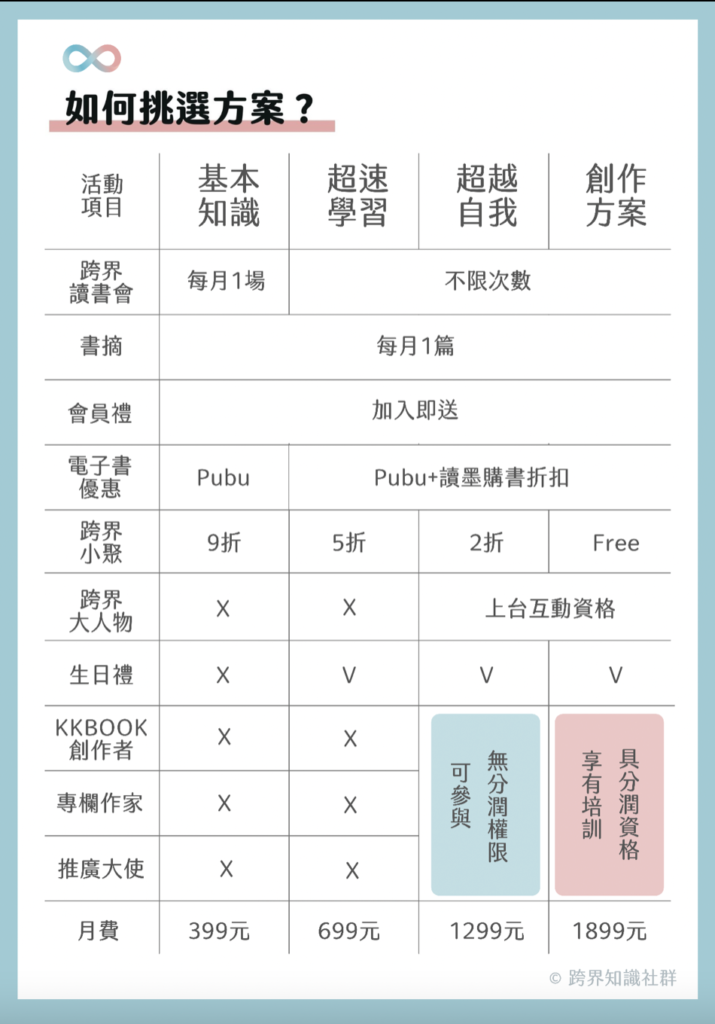
(Cross-disciplinary Knowledge Community Project)
This section covers member data sync, membership management, and internal operations management.
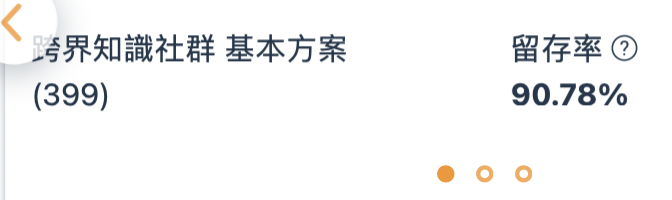
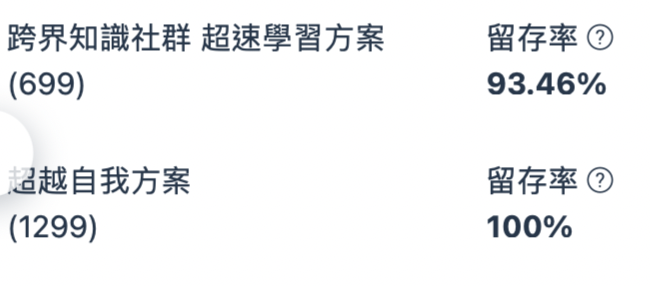
First, the image: our current four plans' retention rates—excluding the ¥1,299 plan we didn't actively promote—are 90.78% for the basic plan, 93.46% for the accelerated learning plan, and 100% for the creator plan. However, this plan only launched a month ago, so the numbers may still change.

Breaking Through Platform Limitations
First, let me define what I mean by "breaking through platform limitations."
Pressplay itself is a "content subscription" platform where projects involve articles with embedded online videos, audio, and other content formats allowing creators to produce content.
Conveniently, the backend lets you set article read permissions so different plan tiers see different content, effectively creating member segmentation.

But the problem was that we had physical events. I asked the Pressplay team whether they might build an event registration system. They responded that they haven't built this feature yet, but expect to potentially add it in the future.
To let subscription members register for events after subscribing, we directed users to external registration platforms. Since we hold 5+ events monthly with different books, we've had some form limitations. Here are the three event registration systems we've used and the transition process:
1. Google Forms
Initially, we used Google Forms for registration, but discovered that after submitting, users couldn't save their responses, so many people would message asking if they'd registered successfully. For management, it was too tedious, so we stopped using it. (If this feature exists, I apologize for lacking the patience to find it.)

2. Accupass
This is the most popular event platform! So we used Accupass for a while, but had a problem: one event couldn't seem to have multiple dates, so we created separate listings for each day of events that month for clearer user registration. (If this feature exists, I apologize for my incompetence—I really did try.)
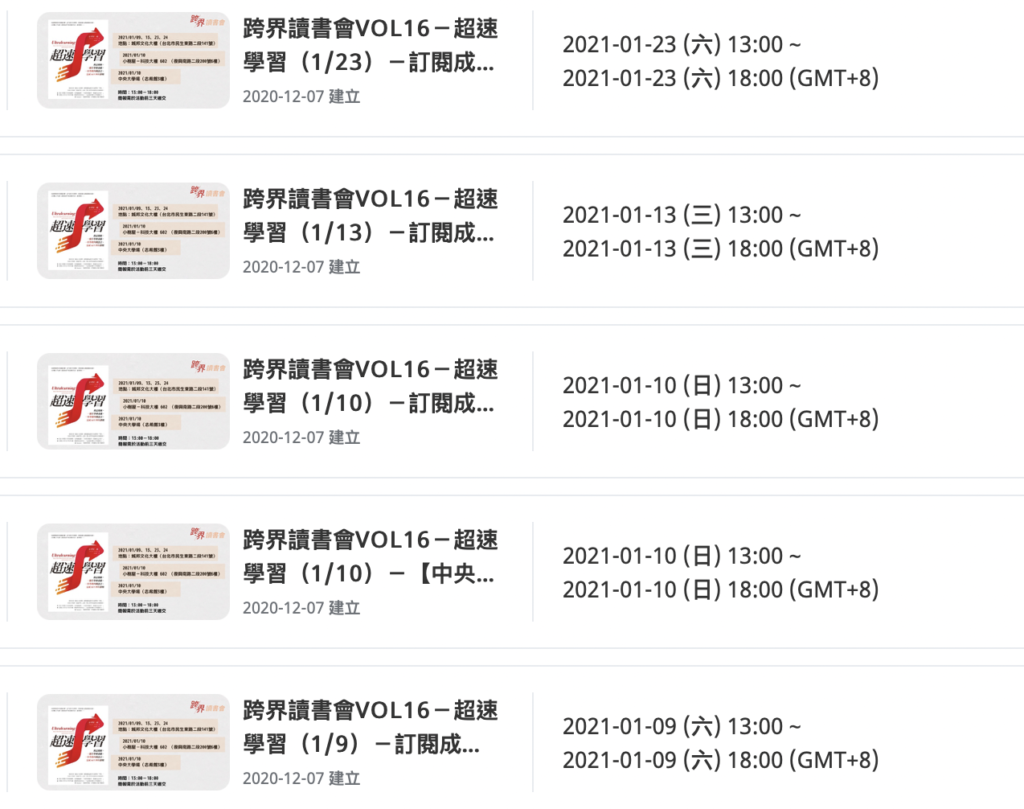
Eventually, managing it became confusing in our heads. Five events meant creating five registration forms monthly, downloading five forms (with auto-naming or codes), consolidating five spreadsheets, and so on.
Not to mention when we later scaled to ten events monthly, registrants got five links and had to register five times (fainting), though according to them, they didn't mind and found it acceptable.
But to solve this, we switched platforms again.
3. Beclass
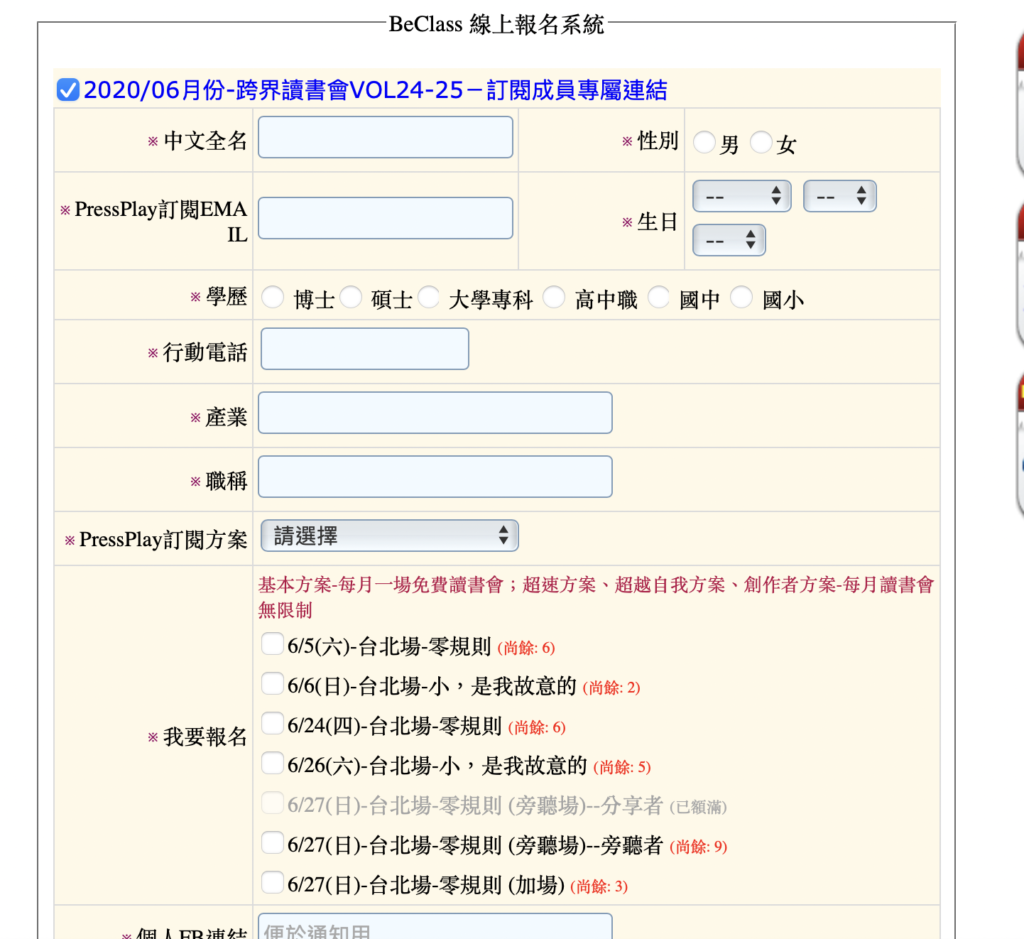
I don't think everyone's familiar with Beclass—its interface is even a bit basic! I want to thank Xiao Cai from Cite Publishing under the Cite Publishing Group for patiently teaching us how to use it. (Deeply grateful.)
But it solved our problem of using one registration form for different-day events! With only one Excel list, data organization became much simpler.
Of course, it didn't completely solve all our management problems, but it simplified the process significantly. (Since I'm lazy, the simpler the better.)
Regarding Membership Management and Data Sync:
Basically there's no shortcut—it's just trial-and-error, and my teammates were really incredible. Because I don't know functions and never dealt with data during school or work, I never thought to use Excel functions to solve problems. I kept telling teammates, how can we make this less tedious!!
After repeatedly raising these issues, my teammates' Excel skills became exceptional! Thanks to everyone's suggestions.
We use manual methods combined with pivot tables (all done in Google Sheets).
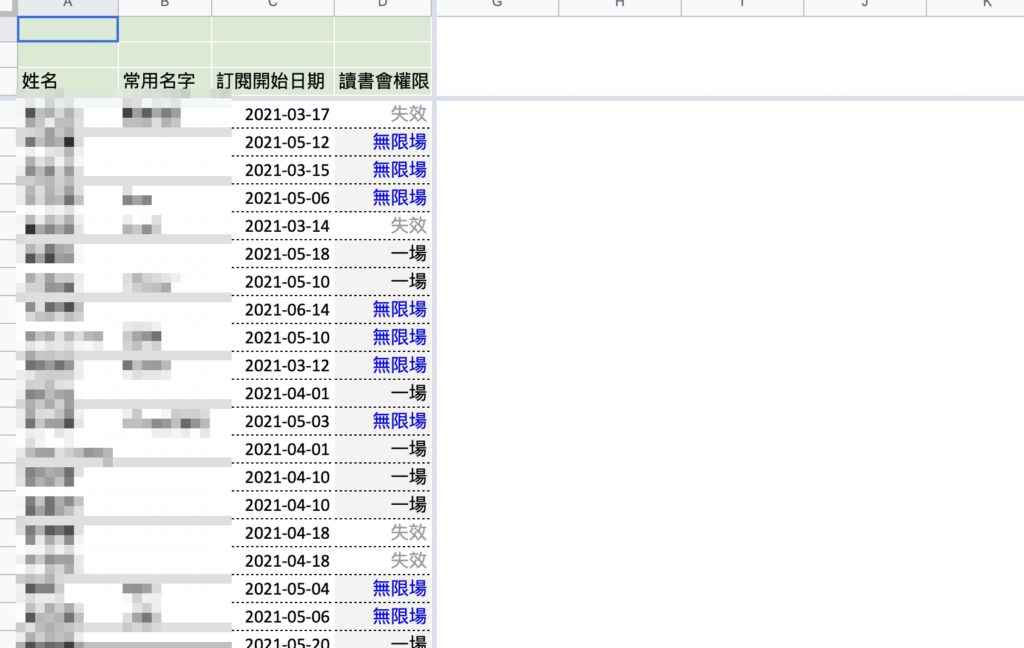
Step One: Sync member lists, regularly check subscriber eligibility each month, calculate subscription dates, and cross-reference with the Pressplay platform.
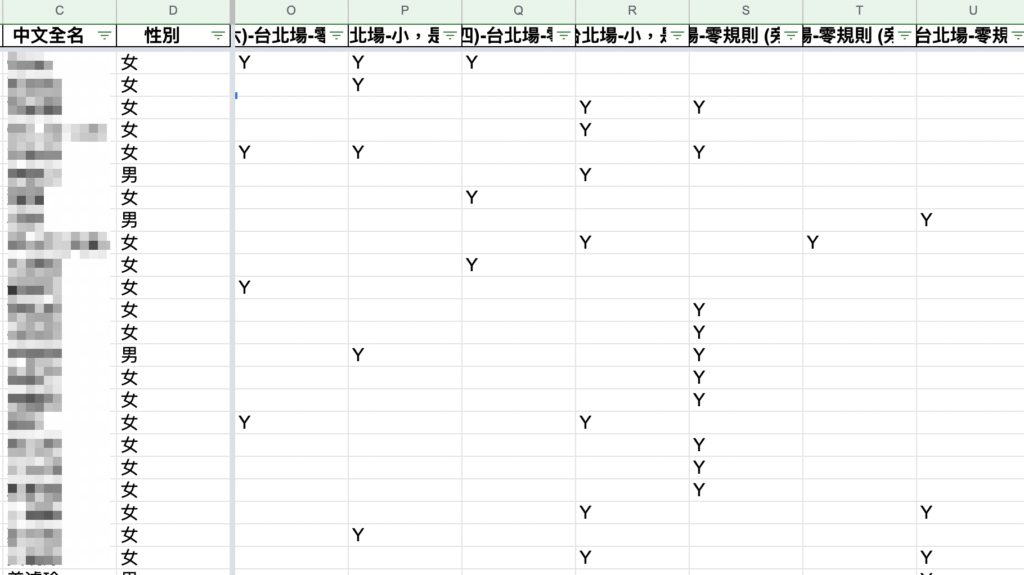
Step Two: Classify registration data using pivot tables—just mark "Y" for attendance on each event, and it automatically syncs to other sheets.
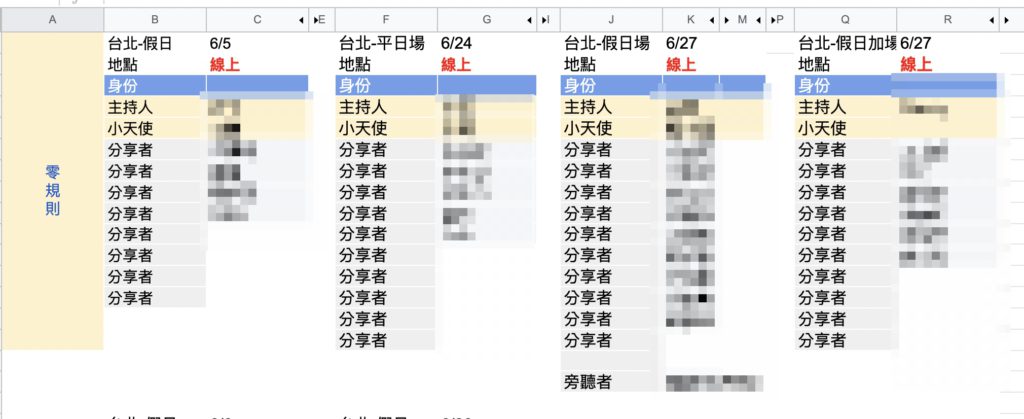
Step Three: Total registration sheets auto-sync without manual classification needed.
That's basically our simple member management sharing. Since Cross-Disciplinary has many internal events exclusive to subscribers, how to create a complete user experience and atmosphere through role-task allocation mechanisms, community platform management, and various physical event support will be shared later. (I'll also be offering a personal branding and commercial monetization course covering these mechanisms in great detail—stay tuned!)
If you're thinking "Wouldn't a website just work?"—yes, I'll address that in a future article.
Thank you for reading this article.
If you're curious about Cross-Disciplinary, click here