In communication theory, agenda setting is classified under communication effects theory, referring to how mass media emphasizes an issue through the direction and volume of its reporting. Issues emphasized in media correlate significantly with what the public perceives as important, with media playing a critical role in this process. The more media reports on something, the more important the public perceives it to be.
The formal introduction of agenda setting theory came from McCombs and Shaw's 1972 publication "The Agenda Setting Function of Mass Media" in Public Opinion Quarterly, studying the 1968 U.S. presidential election and surveying voters in Chapel Hill, North Carolina. Results showed that issues covered by media significantly correlated with what voters perceived as the main issues.
However, theory is static while society is dynamic. Agenda setting traditionally operated through one-directional media transmission from media to public. Today, media and audiences communicate both bidirectionally and multi-directionally. With the support of the "death of the author" concept, audiences interpret content individually. We can observe that agenda setting is no longer limited to media setting topics for the public—instead, the 'media' has become the subject of agenda setting.
How so? We must understand the workflow to dig deeper and learn how to embed 'agenda setting' in media.
Simply defined, a media outlet's workflow is: gather issues → fact-check → report upward (gatekeeping mechanism) → publish.
When gathering issues, reporters personally judge whether an issue will appeal to their supervisors. To produce news output (performance), reporters consider whether content aligns with the organization's position and how to package it for publication. This is how reporters evaluate whether a news event is worth covering.
From a business perspective, your target audience (TA) matters most. While traditionally TA meant consumers, in media marketing, your TA becomes the reporter. To win TA's heart, you must understand how they think. How do reporters evaluate news? This can be simplified into five considerations, each with real examples, varying by media type (the following leans toward TV news):
1. Timeliness
When reporters learn of an event, they assess whether reporting it later (a week, a day) loses impact or becomes outdated. If not urgent, they may wait until a slow news day to report it. If urgent and related to current topics, they immediately gather information and report. Timeliness consideration doesn't necessarily mean an event must occur first—supervisors may demand packaging related content around current topics, prompting reporters to find sources.
For example, when China National Petroleum Corporation's Taoyuan refinery produced non-compliant 95-octane gasoline, reporters would search for car owners whose vehicles were damaged by the faulty fuel, publishing the same day if found, not waiting until the next day.
Or when I covered a 83-year-old Taipei high school closing, a significant event but unreported elsewhere, I delayed one week to verify facts and develop additional angles (principal's debt, personal relationships, land issues, etc.), releasing at the semester's final day. This way, competitors couldn't film students or interview key sources, increasing news exclusivity.
2. Topicality
Reporters care deeply about topicality. Imagine—you'd never see people eating ginger chicken soup on summer news, right?
How do reporters think about topics? Like retailers offering seasonal promotions, reporters identify and prepare for monthly and yearly issues. Looking at a calendar:
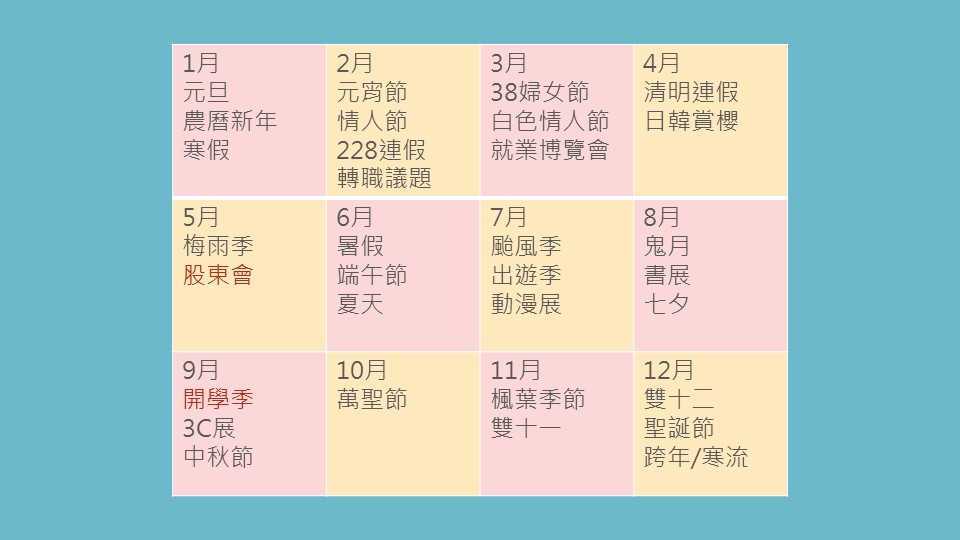
Each month has set holidays for packaging. If sending press releases, timing with seasonal topics is safest. For example, at tech expos, reporters find "hooks" using promotional information and unique appliances provided by PR, or home-living topics like Hello Kitty-designed mini fire extinguishers. By overturning the harsh image of traditional large extinguishers and positioning them as home décor that provides protection, this creates fresh topicality.
3. Relevance to the Public
I should clarify "the public" here. Many people watching news with already-known information think "why report this?" This ignores considering "the public" as an identity. The public, definitionally, is ages 4 to 65. News must let this massive, demographically diverse audience understand the same thing, so story selection must appeal to this broad audience.
For example, I received a letter from Taipei First High School's military office about a summer safety education course. After calling, I found they'd invited a martial arts instructor to teach female students self-defense. You might ask—what's this to do with the public?
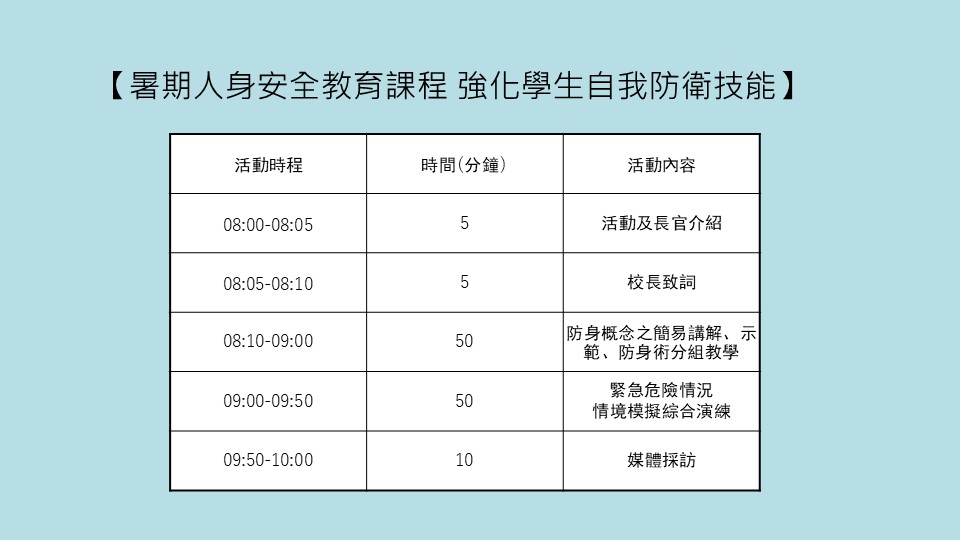
Honestly, I was desperate for news that day, wondering how to pitch this to my supervisor. Reporting it directly seemed boring—just a routine school activity without public connection.
I received this letter around June of the year before—do you remember what happened that month?
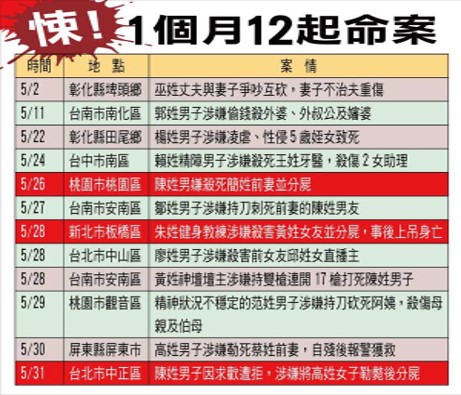
Right—12 murders in one month, all female victims, many dismembered. So I packaged it this way:
"With too many recent murders, schools worry about student safety commuting. Taipei First High School invited a martial arts instructor to teach female flag squad members self-defense!"
Suddenly, a student self-defense story linked to societal concerns. We did morning live streams of the techniques, TV connections, and viewers praised the meaningful news and activity.
https://www.facebook.com/tvbsfb/videos/10155574217380933/
This is "relevance to the public"—information everyone, regardless of age, gender, or background, should know.
4. Exclusivity/Importance
Exclusivity and importance mean news creating social impact with unique content. This matters greatly for reporters under exclusivity pressure. For instance, if a fraud case uses common scam methods, it's unattractive. But if the victim is someone of public standing—unexpected by the public—it becomes exclusive.
Reporters find exclusives various ways: calling acquaintances for recent scandals, posting on social platforms for tips, or finding online issues to develop themselves. Understanding events and sensitivity to news issues prove critical.
A key factor for reporter attention: whether an event is controversial—touching legal lines or operating in gray areas. Legal understanding isn't necessary, but certain laws frequently appear in news: Consumer Protection Act, Social Order Maintenance Act, Pharmaceutical Affairs Act, false reporting, etc. If promoting products negatively (attacking competitors), you can check if competitors violate these laws. Though this example isn't ideal, people receive negative competitor leaks, and because they benefit the public, reporters don't intervene in relationships—they simply report the event, knowing it's industry competition, still reporting it.
5. Visuals
TV reporters especially care about this. If you've contacted TV reporters, they definitely asked:
"What visuals can I capture?"
"Is there someone to interview?"
"Will you provide XXX items for filming?"
TV news requires visuals, so high quantity, vibrant colors, and operational items are ideal. Don't just present an issue expecting coverage. Don't think your idea is brilliant and reporters should interview you. If you don't understand their needs, why would they cooperate? With millions of news stories daily, why would you be their choice?
For example, a brand launched a phone highlighting upgraded night mode. News cameras can't capture night differences, so the vendor prepared a completely dark room at the press conference with a dual-phone mount—new model on left, old on right—letting reporters film screens directly, comparing brightness. The vendor designed this visual proactively.
【Actual Press Release Example】
I highly recommend a job portal's press releases. They never send document-format releases confusing reporters. Instead, they clearly state the day's topic, available visuals, attendees, and data.
For example, at university entrance exams, they released:
University entrance exams begin on the 17th. This year's enrollment drops to over 133,000 registrations. The dragon year enrollment boost fades, creating additional pressure for struggling universities. Yet some universities remain attractive with growing enrollment. What are 2020's most-loved universities by employers, and what qualities should new graduates possess for workplace success?
Inviting:
1. School representative: ranked #1 private technical university representative
2. Part-time electronics sales worker excels, enriches resume, attracts Japanese companies offering ¥300,000 salary – Asheng (formal dress, self-introduces in Japanese)
3. Fresh graduate holding 10 financial certificates enters finance, pursued by 5 financial holdings – Tsewei (displays multiple financial certificates)
4. Laments insufficient academics, returns as student. Second-year beauty competition champion, consecutive winner, startup prospects bright – Ruan (demonstrates cutting-edge makeup techniques)
The job portal's news focus is publishing employer-favorite university rankings. But because entrance exams are topical, they front-loaded media-needed hooks, arranged interviewees including the top school principal—delivering interviewees, topics, and visuals simultaneously.
Searching keywords shows numerous mainstream media covered this news:

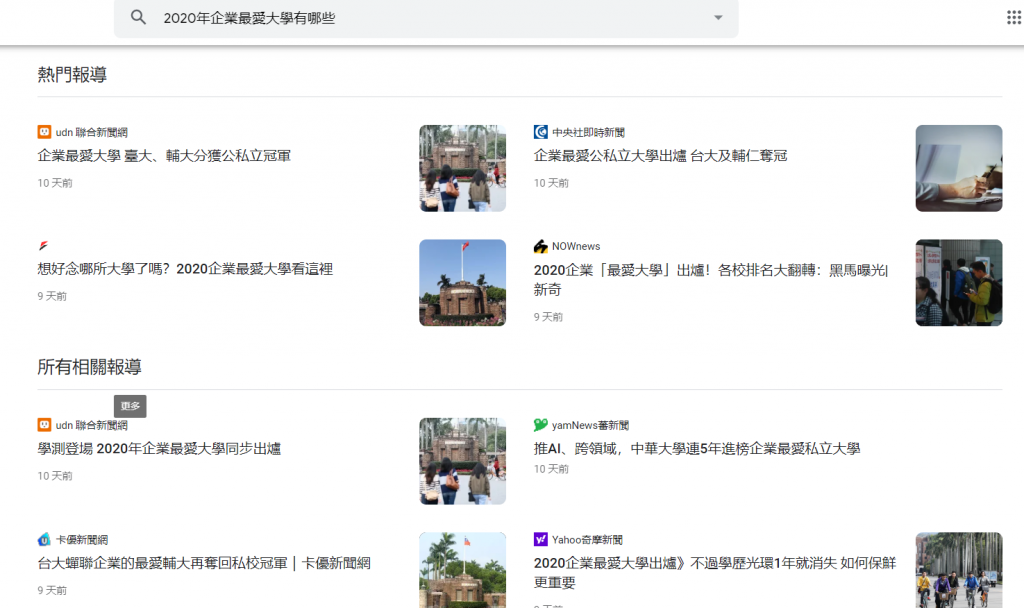
Notice almost all media followed this press release's structure. This exemplifies my initial point: "media sometimes becomes the subject of agenda setting"—no longer purely media setting topics for the public.
Reason? Media workers juggle excessive tasks, barely finding thinking time. When companies consider comprehensively, providing quality, meaningful news, they easily satisfy media appetites. Issuing press releases means understanding your audience's (reporters') perspective, distributing accordingly, and leaving room for discussion and assistance. Reporters are people too; when you can package discussable topics, they'll quickly remember you.
Author: Karen
National Chung Cheng University Graduate Institute of Telecommunications and Broadcasting | Published papers at Fudan University, Shanghai | Specializes in audience research and news media studies
Former positions: Hong Kong 01 Group Duowei News special reporter / TVBS News text reporter / China Times News text reporter / ETtoday social editor / GoSky startup media consultant
Contact: info@ladykaren.org