Watching this film, 'Preparation' (released in Taiwan as 'The Most Beautiful Promise') cost me half a box of tissues—no exaggeration. Even our 'spoiled young master,' who doesn't cry easily, couldn't help but cry in the end and shouted "Why is this so realistic!" By comparison, we thought 'Along with the Gods' was just okay... (personally, I prefer the character design of the comics lol)
Usually, Korean films that become big hits and receive attention in Taiwan need famous celebrities to draw crowds before audiences are willing to pay, like 'Train to Busan' with Gong Yoo, which led people to care about 'The Crucible' in which he appeared; 'Along with the Gods' has Ha Jung-woo, reminding people of 'The Handmaiden.'
But I personally love watching these small, intimate films—ones leaning toward family, warmth, and emotion always make me cry repeatedly. This time, 'Preparation' made me cry so hard my eyes swelled, and my head ached for almost half a day—the kind of sadness where tears just pour out uncontrollably. The previous film I watched, 'I Can Speak' (released in Taiwan as 'Grandma's Fabulous English'), also made me cry, but standing in the protagonist's emotional position, the 'ache' of revealing a long-hidden secret... I won't say more here. The trailer completely avoids this, deliberately creating that impact. You absolutely must watch this film!
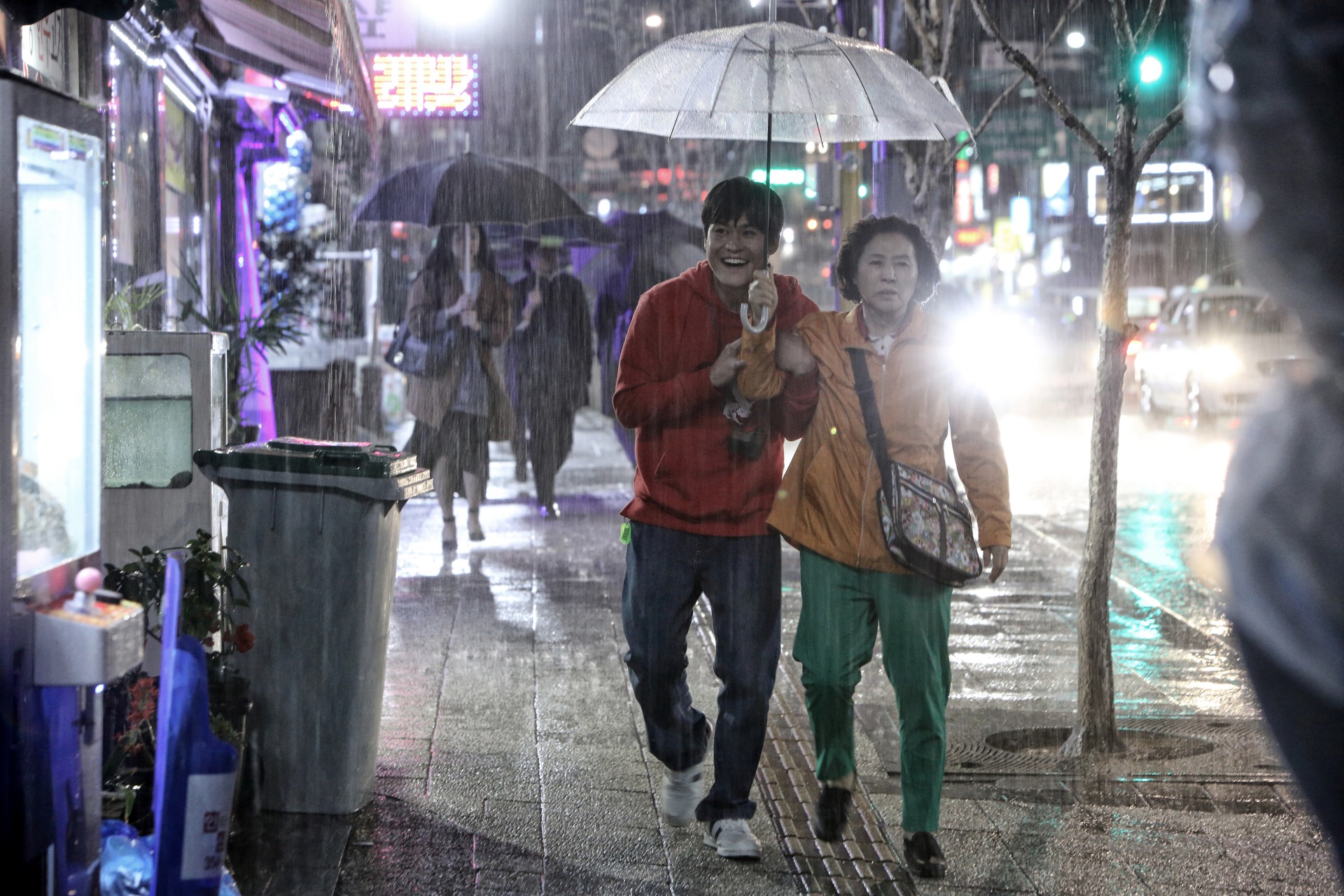
Back to the point: 'Preparation' tells the story of a mother who has cared meticulously for her son with disabilities for 30 years. As her life draws to a close, she makes 'preparations' for everything her son will need to survive alone in the world—a touching drama that centers entirely on the issue of long-term care, revealing the unseen hardships and devotion involved.
Note: Long-term care (LTC) is a service that assists patients with chronic diseases or disabilities who are unable to care for themselves, meeting various medical and non-medical needs.
The protagonist 'Choi In-kyu' (played by Kim Sung-kyun, from previous works like 'Reply 1994' and 'Reply 1988'), was born with disabilities. His mother 'Ae-sun' (Go Doo-shim, a veteran actress who has won countless entertainment awards), has cared for him for thirty years. In-kyu cannot manage his own life; the first thing he says every morning upon waking is "Mom, cook me rice."
Though In-kyu loves eating and is an adult, his mind and behavior are childlike. He steals his niece's pocket money to buy snacks at convenience stores and can eat two servings of fried eggs by himself. He loves sneaking to kindergartens with a telescope to peek at the pretty teacher, and he enjoys watching TV—nature documentaries about the Arctic and Antarctic—because he yearns for freedom and loves nature.
However, In-kyu is terrified of people staring at him and whispering mockingly. Even if it's not directed at him, his inferiority complex makes him feel they're laughing at him for being "stupid." When this happens, In-kyu becomes violent and has even been to the police station multiple times. This doesn't make him a bad child; rather, it's the only way he knows to defend the deepest, most tender wound in his heart. (This scene made me cry hard); yet he's also the kind of person who would stand up and fight his brother-in-law to protect his sister. That's how pure he is.
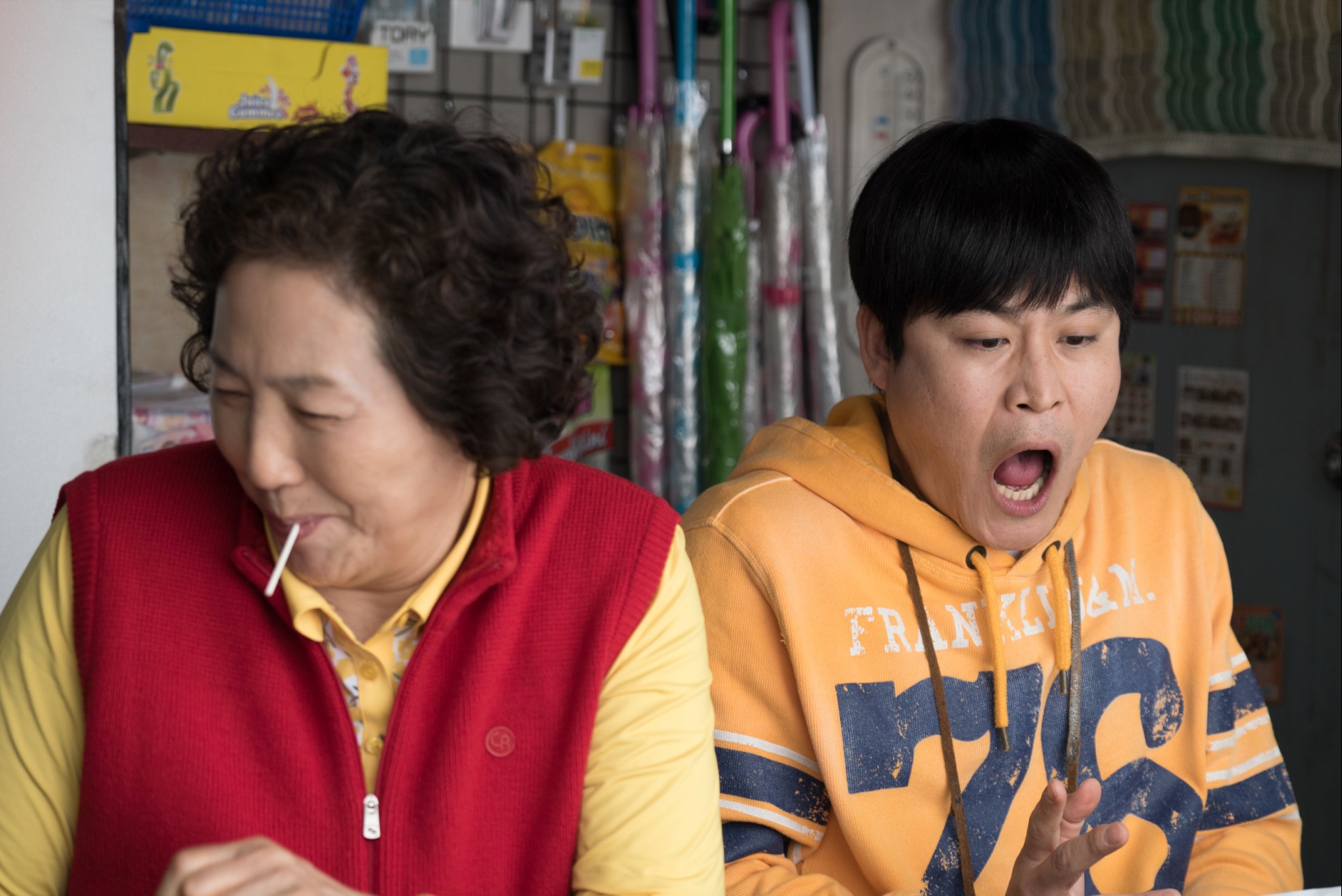
In-kyu loves his mother dearly, but when he throws tantrums, he tells her "I don't want you" or "I want to live alone"—like anyone during adolescence might say things they don't mean to their parents. Every day, In-kyu and his mother go to a small street vendor stall at a plaza, and though business is slow, they manage to get by. His mother has hardly ever let In-kyu leave her side.
So when a social worker official (played by Park Chul-min) suggests that In-kyu could find jobs specially designed for people with disabilities, his mother flatly refuses. She even tells the official that her only wish in life is "to die on the same day as my son." This simple, seemingly impossible statement completely reveals how worried the mother is about her son being alone.
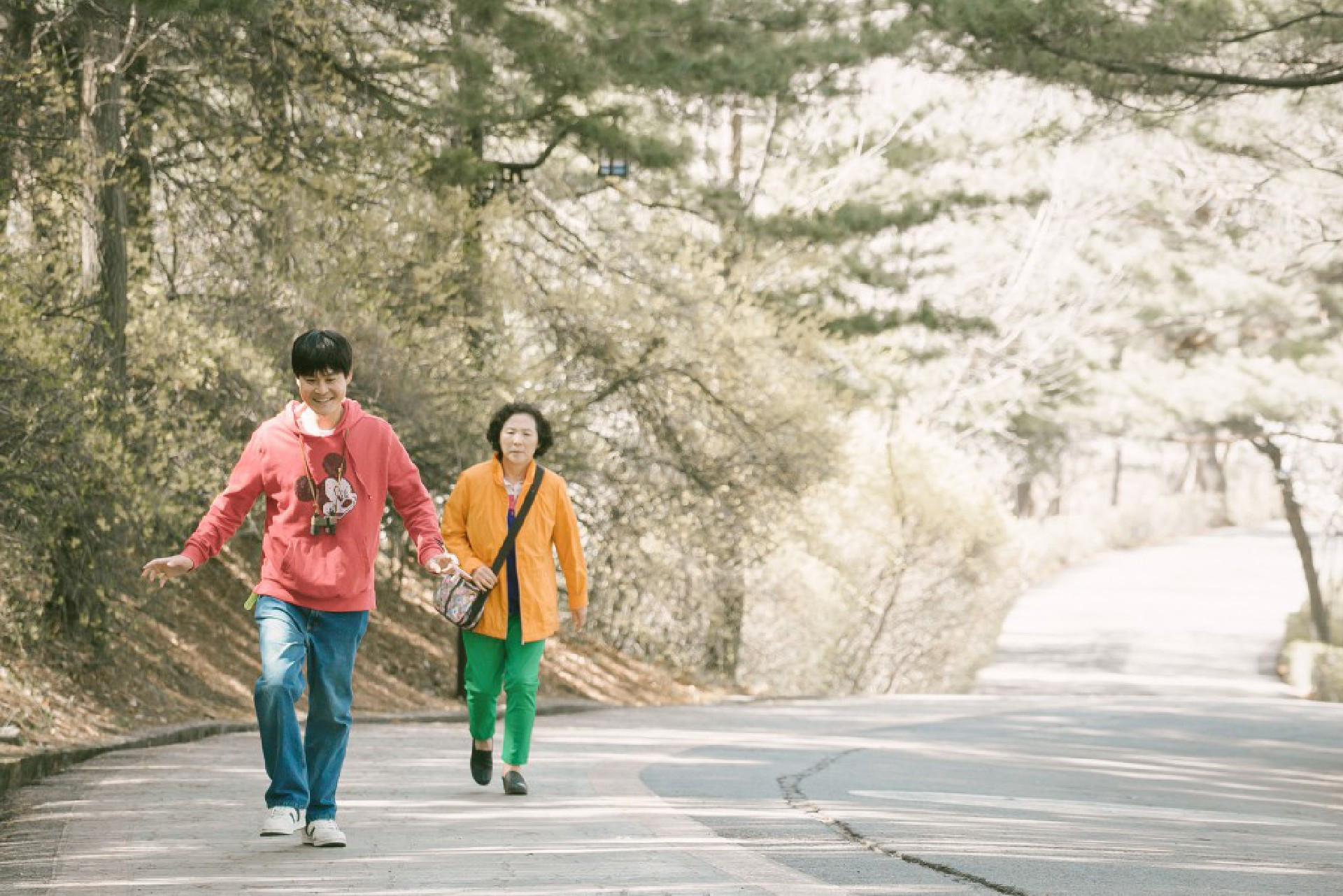
Life continues peacefully as usual, when suddenly the mother is diagnosed with stage three brain tumor—she has only six months to a year left to live. Of course, illness is a common plot device, but at this point things change. The mother begins taking In-kyu around to inquire about institutions that could care for him. With limited resources, they can only look at public facilities, where many people with disabilities are confined to a single room in poor conditions, able only to see the outside world through a window. How could In-kyu, who loves nature so much, possibly live this way until old age?
"Mom, hurry and take me away from here. In-kyu doesn't like it here," even In-kyu, who has difficulty expressing himself, felt frightened. How could a mother who loves him so much possibly let go?
From here on, the film's title 'Preparation' truly comes into focus. The mother begins asking social services to help find In-kyu a suitable workshop.
Even after countless requests, she persuades the official to let her personally train In-kyu to become "an adult capable of independent living." How difficult must this be for someone with disabilities who has never managed any aspect of daily life for thirty years? In-kyu, who initially resisted, gradually learns through his mother's patient companionship, using "methods that someone with cognitive disabilities could understand" to overcome his psychological barriers, and eventually does remarkably well (you must watch this process yourself).
From daily self-care to work, cooking, taking transportation, and making friends—the mother uses experiential methods to teach In-kyu everything. Throughout this process, the mother is certainly worried, but knowing she will soon leave this world, she can only teach her child independence through 'preparation' and letting go.
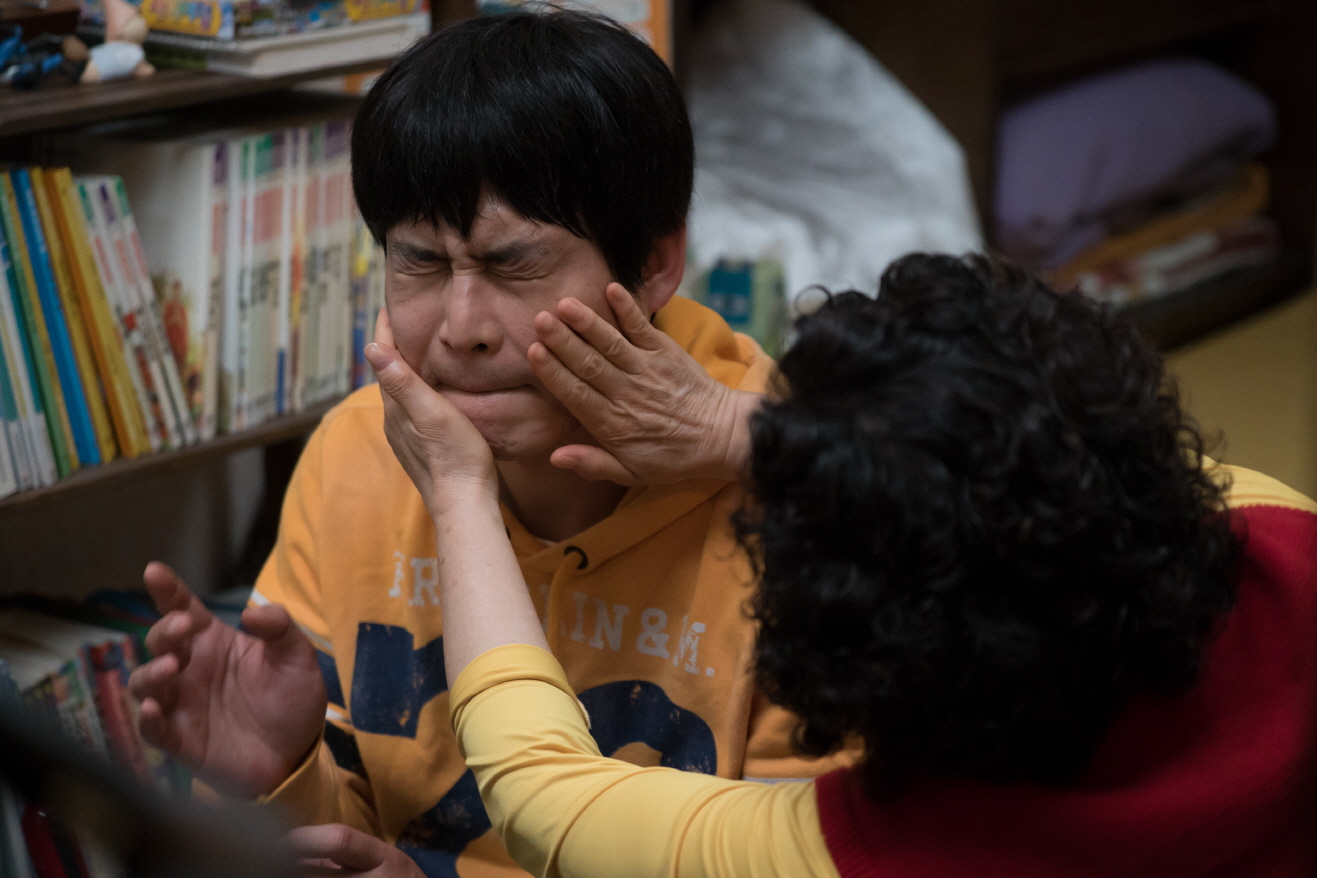
"If you don't behave, Mom will come back and hit you!" The hospitalized mother once told In-kyu this, so when he doesn't see his mother for many days, In-kyu deliberately injures himself so that his mother, unable to bear it, comes to the emergency room. The now-independent In-kyu starts acting up again, needing help with everything. Realizing this won't work, the mother teaches In-kyu about death through the story of "Three Little Chickens."
"Death means this person will never come back," and "But you must promise me that on that day, you cannot cry—you must be very strong, or your sister will be so sad." Finally, the mother passes away. In-kyu keeps smiling, beaming back at his mother's photo, waving and smiling as he sees her off. This scene is absolutely tear-jerking—this is why Taiwan translated the title as 'The Most Beautiful Promise.' Even as I write this article right now, I can't help but get misty-eyed.
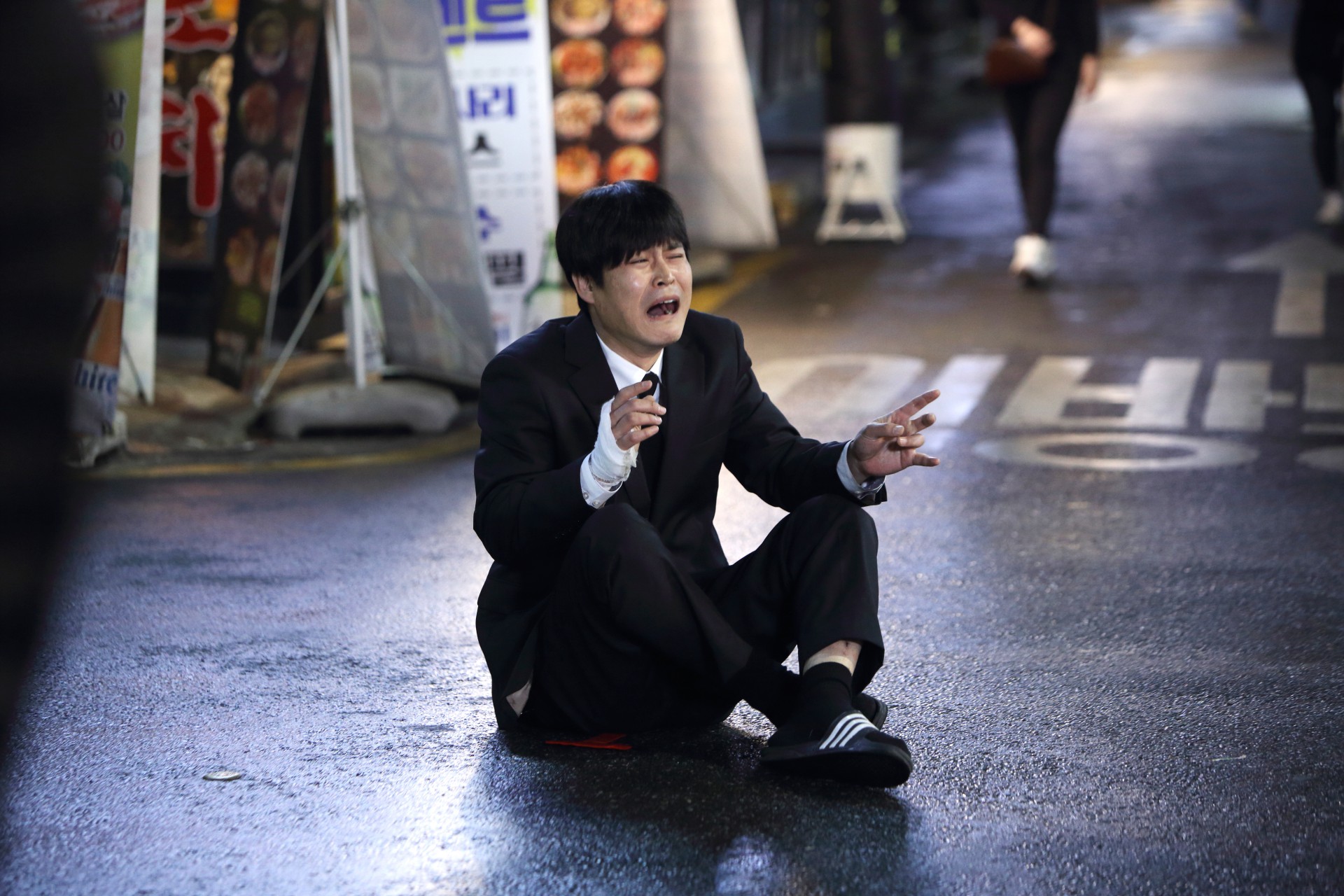
While watching, I kept asking myself "What would I do if this were my child?" Honestly, I don't think I'd have the courage to let go of everything and care for my child for thirty years. In the film, the mother even once considered taking her son's life with carbon monoxide. This reflects how much psychological and physical pressure long-term care providers face in real society—attending to every detail of food, clothing, shelter, and transportation, and watching half a lifetime pass by. I don't think I'd have that strength.
After watching this film, besides feeling deeply sorry to my own family (much more impactful than 'Along with the Gods'), I also understand why society frequently reports tragic news about long-term care families. Who would willingly kill someone they love?
"Dad, will you kill me?" Father overwhelmed by caring for cerebral palsy son kills him
A 44-year-old man surnamed He in Taipei, overwhelmed from caring for his 21-year-old son with cerebral palsy, drove him near Taipei Songshan Airport two years ago and ended his life with his own hands. He claimed there was no premeditation, but seeing his son slip from his chair, he casually asked "Dad is bad and wants to kill you—is that okay?" His son said "okay," and as he strangled his son, his son put up no resistance.
84-year-old nailed wife to death, sentenced to 9 years, asks "Why wasn't I given the death penalty instead?"
An 84-year-old man surnamed Wang could not bear to see his elderly wife suffer from a broken leg and Parkinson's disease. Last year, he sedated her and drove a screwdriver into her skull with a hammer, killing her. After being arrested, he even criticized Taiwan, saying "If our country had euthanasia, why would I need to kill my wife with my own hands?"
This film was released in Taiwan on December 22, 2017, with only 140,000 tickets sold nationwide. Currently, no theaters are showing it, but you can find it online. Prepare plenty of tissues—you will cry until your eyes swell.