This series of articles on entrepreneurship failure is mainly about a beauty brand I launched in 2015. Although I didn't formally establish a company, I purchased a platform from a system provider, sourced products from South Korea, and managed social media. Over about a year, I eventually decided to close it down. In this series, I'll document the entire process!
What's worth recording about failure?
Jack Ma, whom I admire, once said, "There are countless factors for success, but failure factors are all similar. If we combine the experiences of all failed people and seriously study these mistakes, I hope everyone will spend more time understanding why they failed." Failure is the greatest wealth in one's life because it represents that you once had an idea and took action—not just fantasized. Through time and effort, you discover what suits you and what doesn't. Even if you ultimately fail, the results are entirely your own.
You can refer to my previous brief notes:
Entrepreneurship Failure 101! Launched a beauty brand at 25, closed after one year — The biggest lesson: "Accepting my flawed self" Part 1 / Part 2
Now let me explain why I wanted to launch the beauty brand back then.
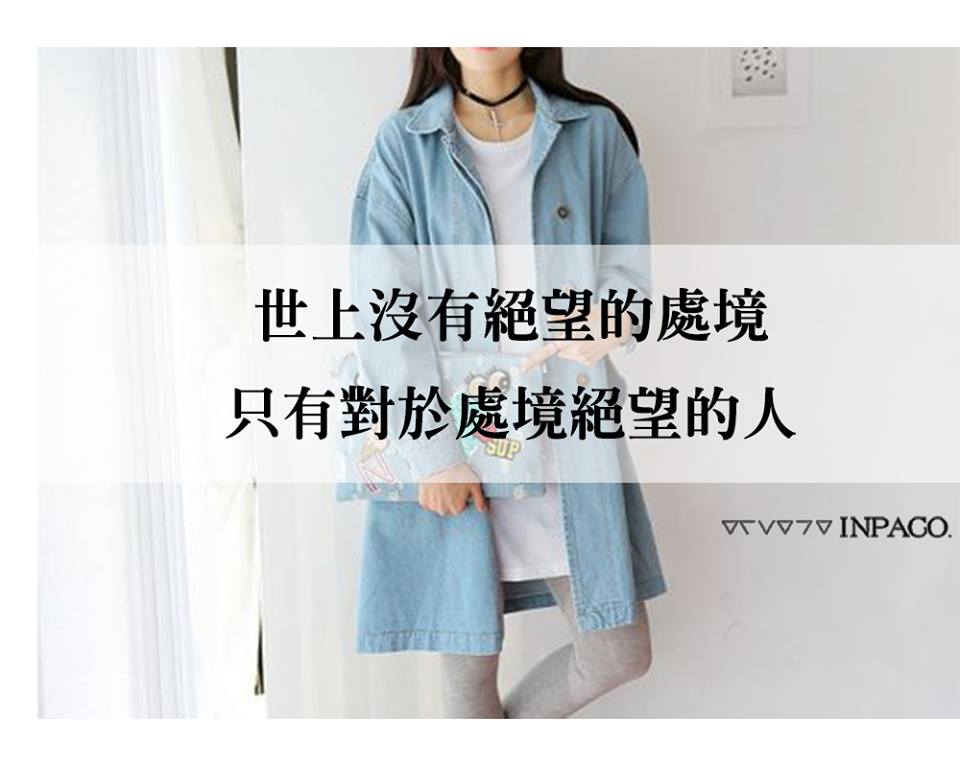
This is the LOGO I designed:

Philosophy: INPACO is composed of three elements: Influence, Passion, and Confidence. To us, these three qualities form the attitude we take toward life.
Each pair of triangles has a missing side, representing that people are imperfect, but we strive for perfection. I primarily resold Korean beauty products. Actually, the results weren't bad. On YOUTUBE, by translating PONY's makeup tutorials, I gained 32,000 subscribers in half a year, and my most-viewed video had 500,000 views. I actually received many collaboration offers.
The reason I wanted to do this was incredibly simple: in 2014, when I studied abroad in South Korea, Korean beauty products I bought there, like INNISFREE eyeliner, cost only 105 NT, but in Taiwan they cost over 250 NT—twice as much! Single eyeshadow palettes were the same: 45 NT during sales in Korea, but over 200 NT in Taiwan. Wouldn't that make you angry!
So when I returned to Taiwan and had no way to buy at Korean local prices, I got frustrated and impulsively started reselling Korean products. But the timing was all wrong. Why?
1. I was no longer in Korea; travel costs were high and trust was diminished
To do Korean reselling, you really should be based there. When I was there, a blogger actually wanted to collaborate with me, but I was too lazy at the time and didn't follow up. But once back in Taiwan, to source wholesale from Korea, just airplane tickets cost over 6,000 NT, and if I'm sourcing Korean goods from Taiwan, customers would wonder, "Where are these products from?" This naturally raises questions about authenticity. Honestly, Taiwan has many channels to get Korean products; people just don't know about them. (I'll explain more thoroughly in later posts)
2. I oversimplified entrepreneurship; I didn't consider my own abilities and interests
Initially, I thought entrepreneurship was too simple, so I ordered products together with friends already doing reselling, which accumulated larger quantities. At first, many friends ordered from me. I remember the first product was "Blackhead Pore Cleansing Gel," and I even designed an activity for fans to participate in and wrote a proposal (haha).
Exploring Iceland's geysers and hot springs surrounded by rugged volcanic landscapes.
↓Self-made activity poster

↓Activity proposal

At first, of course I was overenthusiastic, thinking my proposal and design made everything look professional. Later, 30 friends ordered this blackhead gel, but no one participated in the activity. Getting orders felt fulfilling, but without orders, I lost that sense of achievement. I also didn't really want to keep promoting products to friends because this wasn't my interest at all, so I gradually lost enthusiasm for selling.
Most of the time, it was just me alone planning and executing, asking friends for help, patching things together. This was the problem: my initial motivation was too simple. When I hit unsolvable issues, I felt frustrated. I realized that entrepreneurship should start with thinking, "How can I contribute to others?" not like me—"How can I benefit myself?"
Analyzing it, I initially just couldn't find cheap Korean products for myself, so I decided to start a business. The idea was really too simple, lacking market research, ability assessment, and financial planning—things you should consider at the start. So when obstacles arose, I easily lost reason to persist.
If you're thinking about starting a business, I strongly recommend you never get caught up in the moment. Calmly evaluate the market environment and timing—these two are absolutely necessary. Also, "Why do you want to start a business?" must have a powerful reason behind it, something you'll fight to maintain even when criticized.