"If students have the ability, they naturally want to go abroad, which isn't a bad thing for Taiwan either." By late August, Dai Xiangyu will be packing up to go from Taiwan to City University of Hong Kong. With a Scholastic Aptitude Test score of 72 levels and English at the top percentile, he received a full scholarship. He frankly says Hong Kong's pull on him is enormous—because he was also accepted to National Taiwan University's Department of Information Management, yet plans to defer and use NTU as a backup. This is what having enough ability and the power to choose looks like.
Dai Xiangyu believes that Hong Kong schools teach entirely in English, with highly diverse student bodies consisting not just of Hong Kong students but also students from around the world. However, this doesn't mean NTU isn't internationalized; it's that Hong Kong is more internationalized.
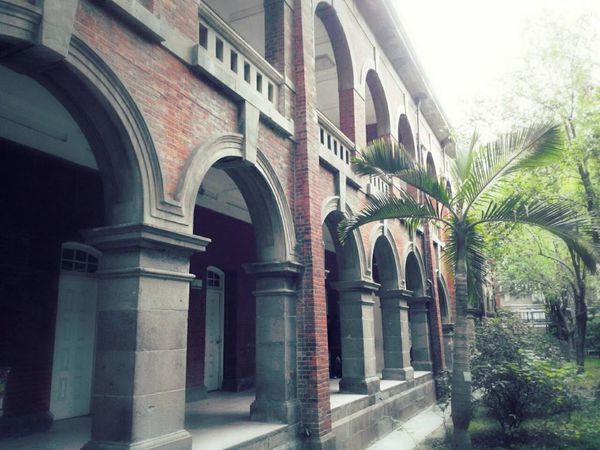
From his perspective, we can understand why top students are leaving in droves. This year after the supplementary exam results were released, Taipei First High School had 120 graduating students studying abroad, including 13 at University of Hong Kong, 15 at Hong Kong University of Science and Technology, and as many as 23 at City University of Hong Kong, plus a total of 77 in mainland China (Beijing and Shanghai), accounting for 64% of the total studying abroad. Even Taipei First Girls' High School and Affiliated High School face the same situation, with 27 students from Taipei First Girls' High School studying in Hong Kong and mainland China, accounting for 48%, and Affiliated High School totaling 24 students going to Hong Kong and mainland, accounting for 55%. What's striking is that this number was zero just two years ago—what's really going on?
Another Taipei First High School student accepted to Hong Kong University of Science and Technology, Lin Yuzhé, already conducted research and participated in university expos in his second year of high school, with a clear understanding of his future goals. He says he's chatted with NTU students and feels their abilities don't meet his expectations. He mentions that senior students said he wasn't on the first and second year reading lists, yet he'd already read books on economics, stocks, and markets. This made him feel that attending university wasn't developing the kind of capabilities they needed, which is why he chose Hong Kong to broaden his horizons.
Lin Yuzhé will soon head to Hong Kong University of Science and Technology to study business management. He also pointed out that Taiwanese schools overly emphasize theory, with corporate internships not available until third and fourth year, but in Hong Kong, students can enter international corporate internships starting in first year. The difference in developing international perspectives is significant. Though top students are leaving, he also directly stated they're not gone for good—rather, he hopes Taiwan will use this competition as a comparison point, allowing the educational environment to improve progressively.