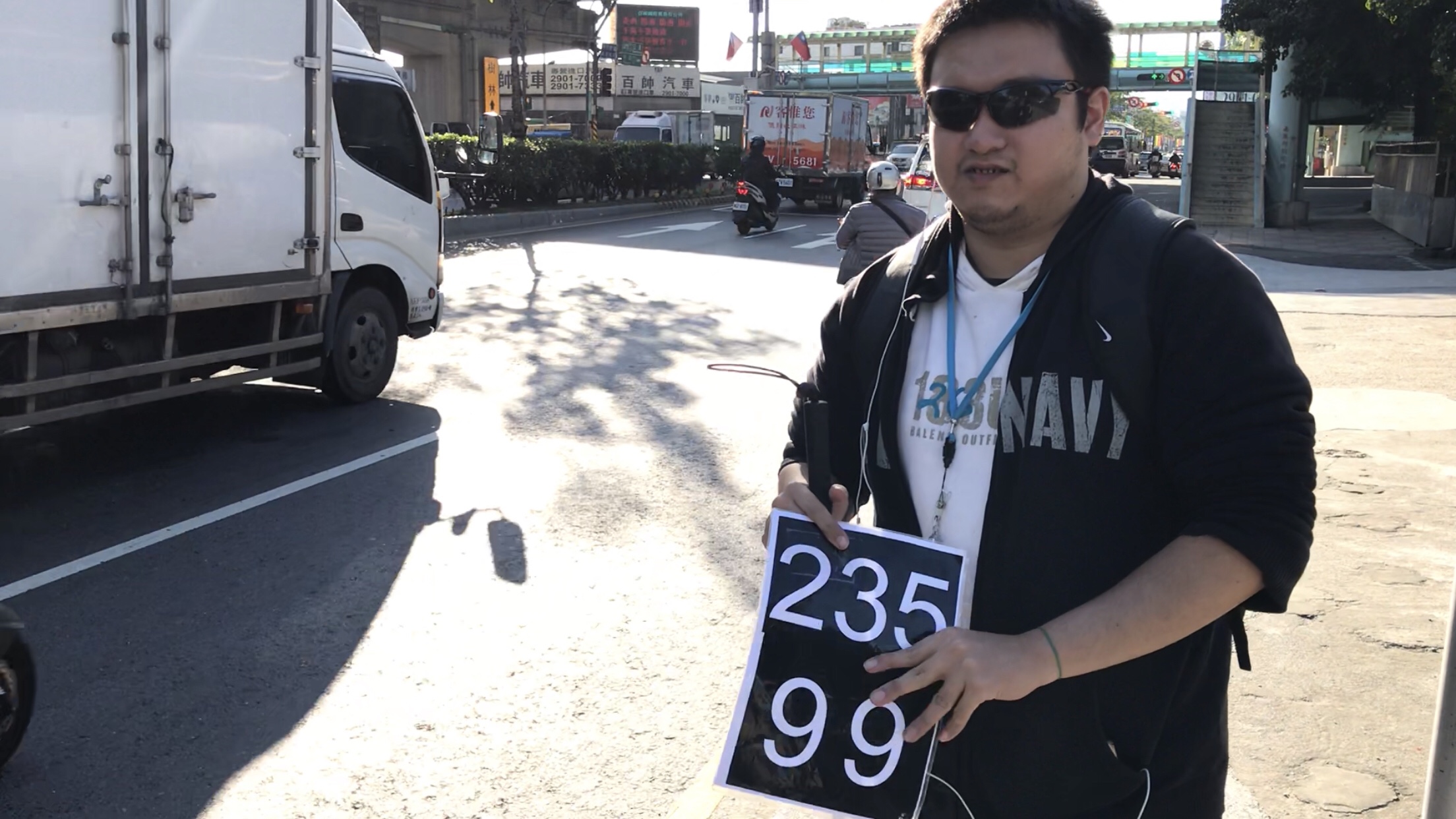
"Can you help me?" the man in dark glasses said softly. It was a bright, sunny afternoon when my sister and I passed by a bus stop. From a distance, we could see him standing in front of the Blind Rehabilitation Center—wearing sunglasses, leaning on a cane, holding an A4-sized sheet of paper. To avoid glare, he had deliberately used white text on a black background, displaying bus numbers "99" and "235." The font was clear enough that I could see him from 50 meters away, even while crossing the street.
This visually impaired acquaintance we encountered went by the name Nike. At the time, he was holding the A4 paper facing the sidewalk, which puzzled me: "Is he trying to catch a bus, or is he asking us to take him to the bus stop?" My sister and I discussed his gesture, wondering if he was asking for help. It was then that we noticed there was a "temporary blind person's bus stop" here—the bus should have stopped to assist. Just as we were puzzling it over, Nike spoke up.
"I've already waited for six buses." Six buses? How was he counting? Nike had just finished class at the Blind Rehabilitation Center. He explained that through Taipei's bus tracking APP, he knew when buses 99 and 235 were arriving. "Six buses have arrived, but then disappeared." Despite knowing the buses had come, no one was willing to pick him up. With a forced smile, he said he just wanted to get to Fu Jen Catholic University to take the MRT, but unfortunately, no bus had stopped to pick him up—leaving him waiting in vain for nearly an hour.
Nike described how, while waiting, he could feel buses stopping beside him, but the drivers didn't say anything. He couldn't tell whether the vehicle next to him was a public bus, a coach, or just a gravel truck waiting at a red light. Even if it was a bus, he had no way of knowing if it was the right one he needed. Afraid of getting on the wrong bus, he didn't dare move, just kept waiting—until he met us.
As Nike told his story, he was smiling, but his tone was filled with helplessness. "Buses aren't very willing to pick me up," "They're reluctant to pull over to the inner lane." If a visually impaired person's cane isn't prominently displayed, drivers think you're sighted and won't even stop. Every comment revealed the inconveniences faced by visually impaired people.
Locals might know that the distance from the Blind Rehabilitation Center to Fu Jen is just one bus stop away—a six-minute drive or a 16-minute walk. Yet Nike waited a full hour, and no bus was willing to take him. And there are plenty of buses on routes 99 and 235.
Zhongzheng Road in Xinzhuang is New Taipei's most dangerous street segment, situated near Route 65 with heavy traffic and numerous buses. From the Blind Rehabilitation Center to Fu Jen, there are ten different bus lines available. Quite a lot, right? Four years ago, the bus stop was located at an intersection near the Blind Rehabilitation Center, allowing visually impaired people to cross the intersection using the audio traffic signals designated for blind pedestrians and wait for buses.
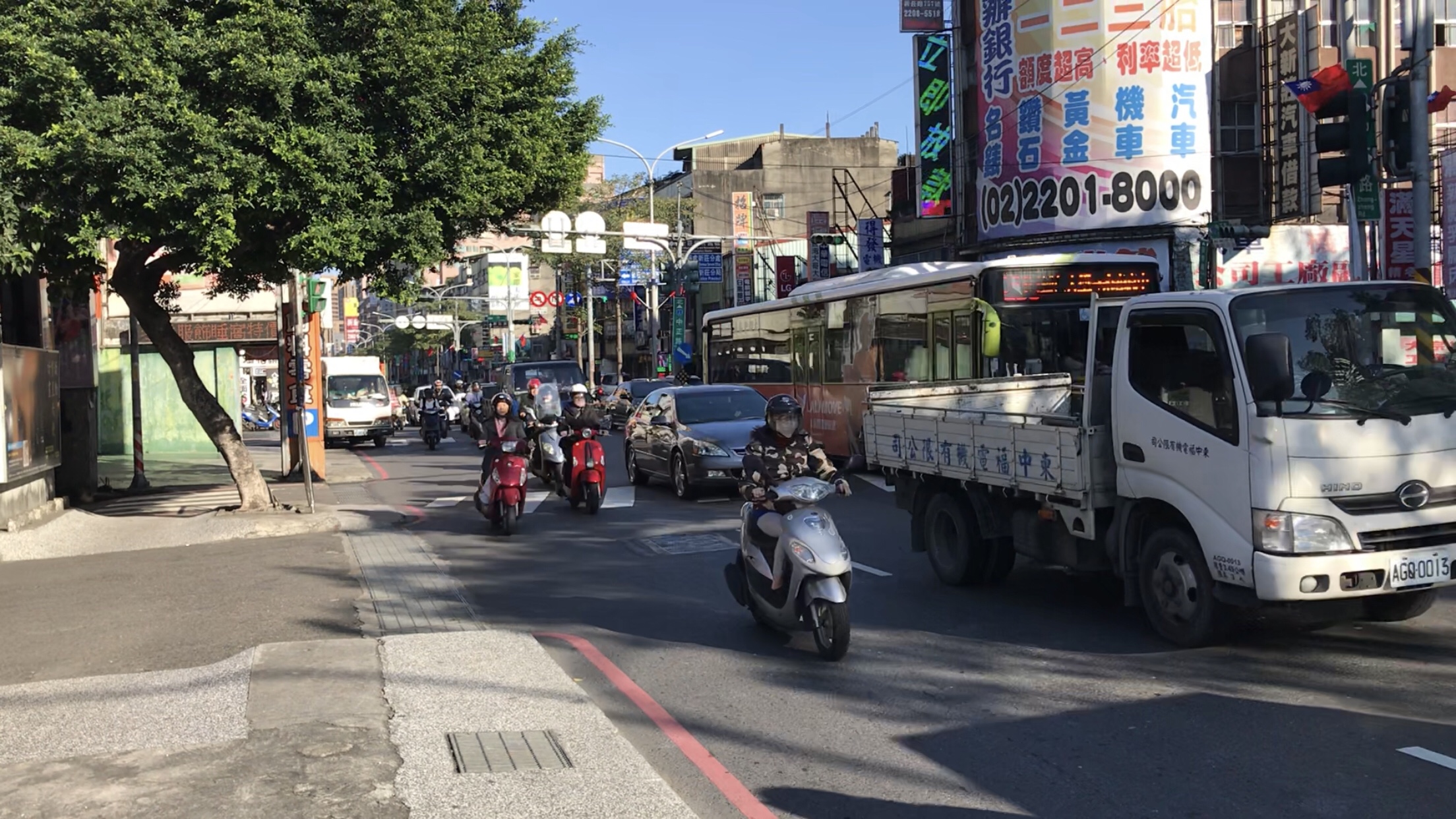
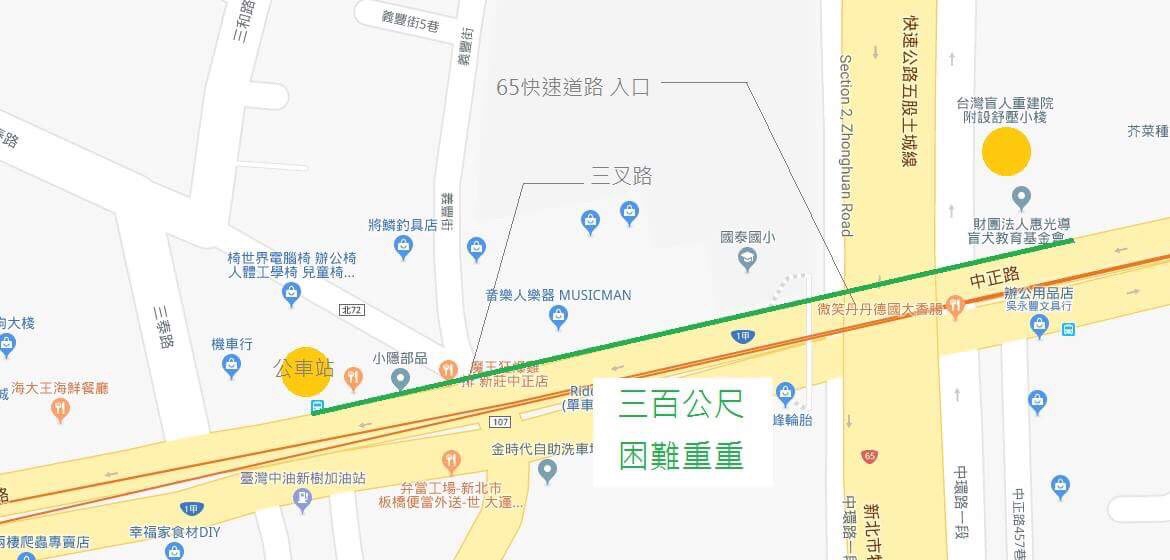
However, due to Route 65 highway construction, the bus stop was relocated. Many visually impaired people enter and exit the Blind Rehabilitation Center, and taking the bus often requires them to cross either Zhongzheng Road and Zhonghuan Road or Zhongzheng and Qiongtai Road to reach a bus stop nearly 300 meters away. The arcade floors are uneven, intersections are treacherous, and it's quite dangerous. A temporary bus stop was later added. At that time, the city's Transportation Bureau said "the temporary stop is a flag stop for visually impaired people." But we encountered Nike—waiting an hour with no bus willing to stop and help.
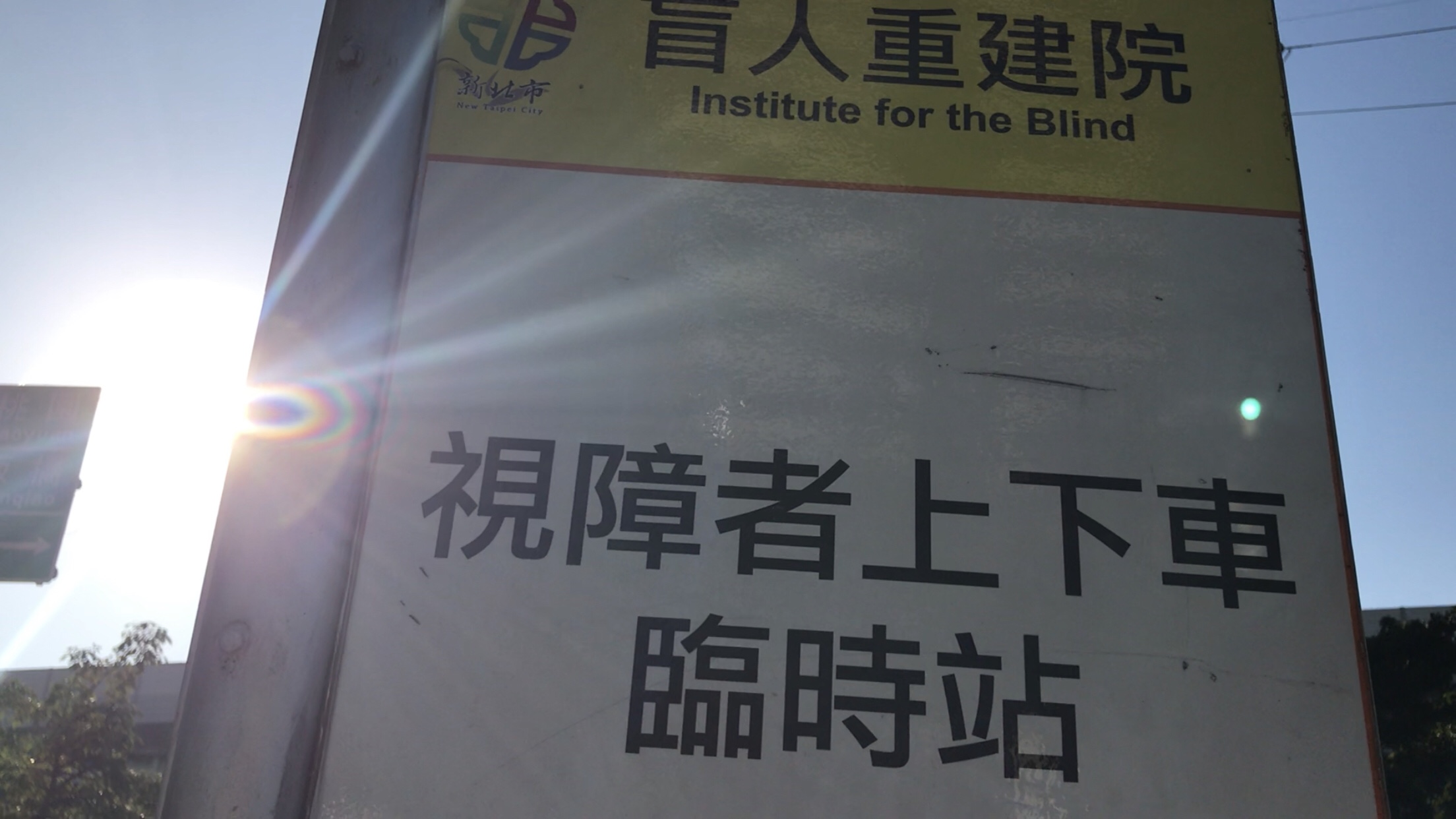
Nike did add that normally he can catch a bus in about 10 minutes, but that day for some reason, no buses were willing to stop. He felt quite helpless. Finally, with our assistance, we managed to flag down a bus in about 10 minutes and he successfully boarded, arriving at the Fu Jen stop. But the rest of the journey, he still has to navigate on his own. It makes you wonder: how difficult is this journey?
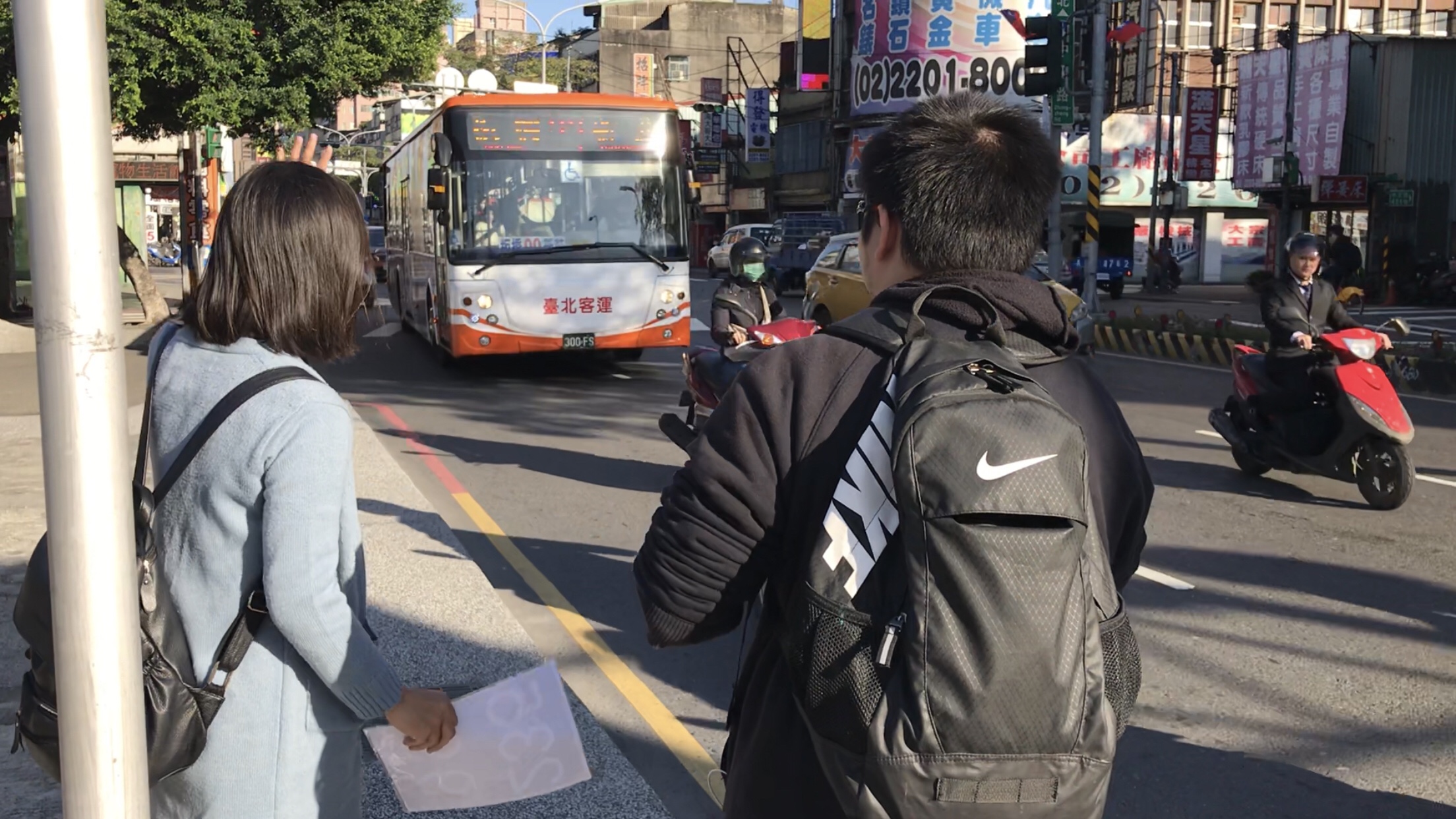
In a subsequent response, the Transportation Bureau stated that the temporary bus stop at this location is specifically set up for Blind Rehabilitation Center students. Bus drivers have all received relevant training and are required to stop and pick up visually impaired passengers when they see them holding a bus number placard. To date, they have not received any similar complaints from rehabilitation center students.
Note: According to the Foundation for the Blind, the term "visually impaired" does not refer solely to completely blind individuals; it also includes those with moderate to severe low vision and moderate to severe visual impairment. According to statistics, there are 57,291 people in Taiwan holding government visually impaired identification, but the actual visually impaired population is estimated at approximately 183,567; those with moderate to severe low vision number about 160,620, and those experiencing mild to moderate low vision difficulties already reach 1,138,073 people, accounting for 4.9% of Taiwan's total population.