Many people often criticize others for "changing their mindset after changing positions," as if they forget their original purpose after a promotion. But the truth is, when your position changes or you get promoted, your mindset really does need to shift. Why? Let me start from the perspective of "information reception."
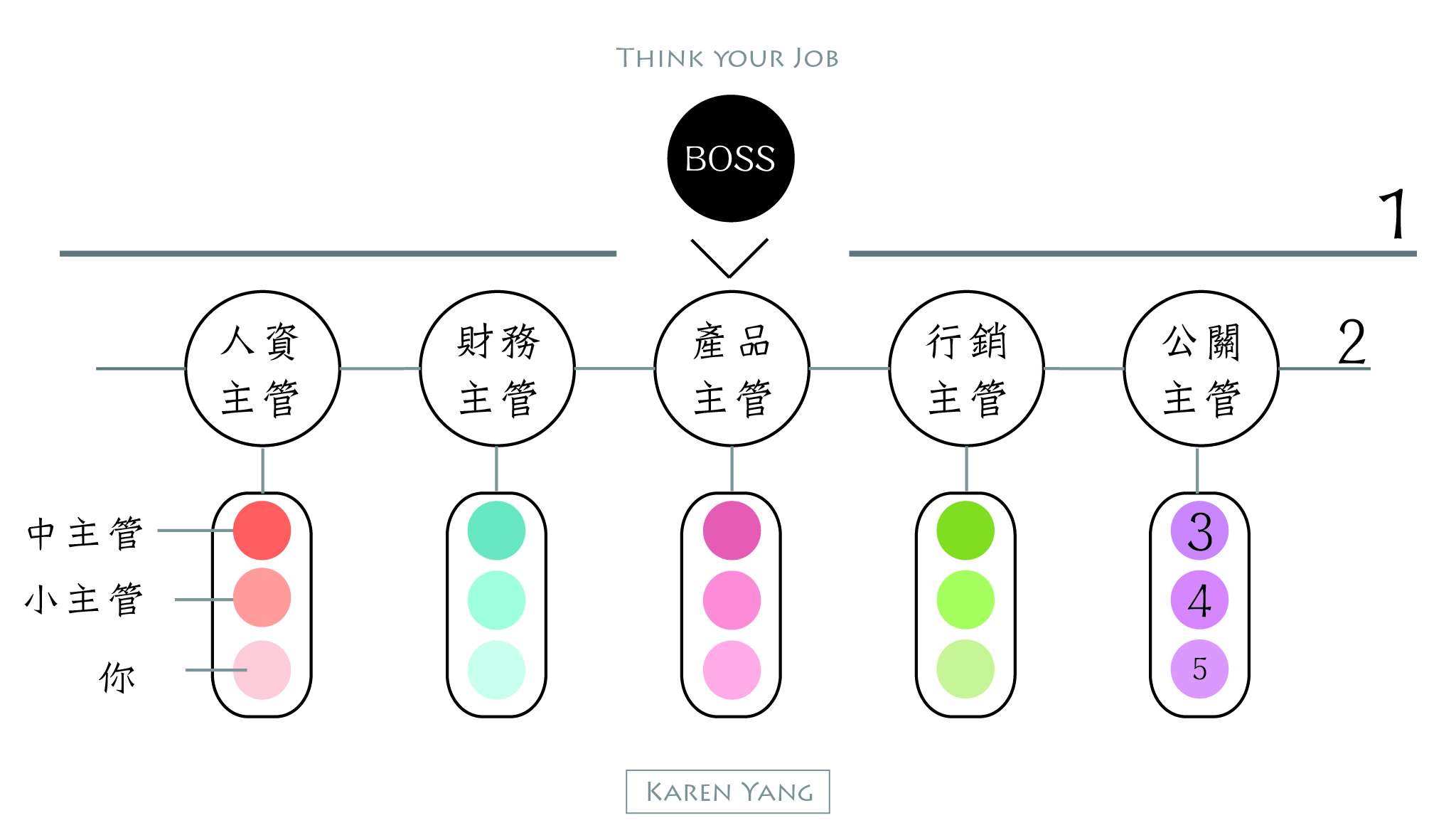
First, take a look at this organizational chart. The simulated scenario is the boss instructing the completion of "Project A," with a deadline given. After the instructions are transmitted, five department heads receive the directive. These five heads communicate with each other, coordinating the project direction, quantities, goals/initial draft completion targets, dates, revised draft completion targets, dates, final completion dates, and other complex planning details. Then they hold regular meetings to report departmental progress and discuss whether additional manpower or execution time is needed.
[ ](http://)
Communication between departments is handled by the heads, meaning each department head exchanges information with the other four heads to understand current progress and direction. After exchanging information, they pass instructions down to their own departments to middle managers. Middle managers assess and break down tasks, then pass them to team leads and entry-level employees. You may be in one of these positions right now, so within the entire big project, you might only be responsible for 10%, perhaps like graphic design for a subsidiary activity.
From the detailed division of labor completed by each person, a complete project is pieced together. Therefore, the lower the employee level, the less understanding they have of the overall project, and they simply need to follow instructions without making mistakes.
Therefore, as your position changes and you move up the ladder, the amount of information you receive increases, and the number of things you need to consider multiplies accordingly. For example, with an completion date set by the organization, say 2018/5/3, your own department's completion date must necessarily be earlier—perhaps one or two weeks—to allow for a reasonable timeline.
Alternatively, using data traffic as a target, everyone must share it fairly, and the best-performing department can receive additional bonuses. Then the department head would want to exceed targets and set performance metrics even higher.
How to operate depends on possessing information at different levels, allowing managers to make judgments—but this is broad information that entry-level employees cannot access. Therefore, when positions shift horizontally or you get promoted, naturally the areas and directions you need to consider change as well. Even colleagues between departments make different decisions and have different approaches due to different information reception, let alone managers?

The second dimension is "authority." When a company promotes an employee to manager, it naturally grants them more decision-making power. For example, hiring new people. When we previously had no authority to decide and just hoped someone could help, but for managers, new hires not only need sufficient ability and won't drag down the team, but also must consider whether their personality matches company culture and whether they'll get along with existing employees. Managers possess sufficient authority to make this decision.
With authority comes the pressure of bearing risk. Perhaps as a subordinate, you knew how to operate more quickly and efficiently, but once promoted to manager, you must accommodate and consider the positions of other departments or make decisions from the perspective of protecting your subordinates. In other words, you must be more cautious and careful—things you never had to worry about when you were simply a subordinate.
That's why we say, change your position, change your mindset. After all, your identity is different, the situations you face and risks you bear increase accordingly. If you continue doing things the old way, not only will you fail to grow, but the organization may suffer as well. And when switching to a new company, you need to change even more things… (To be continued in Part 2)